Use this photo
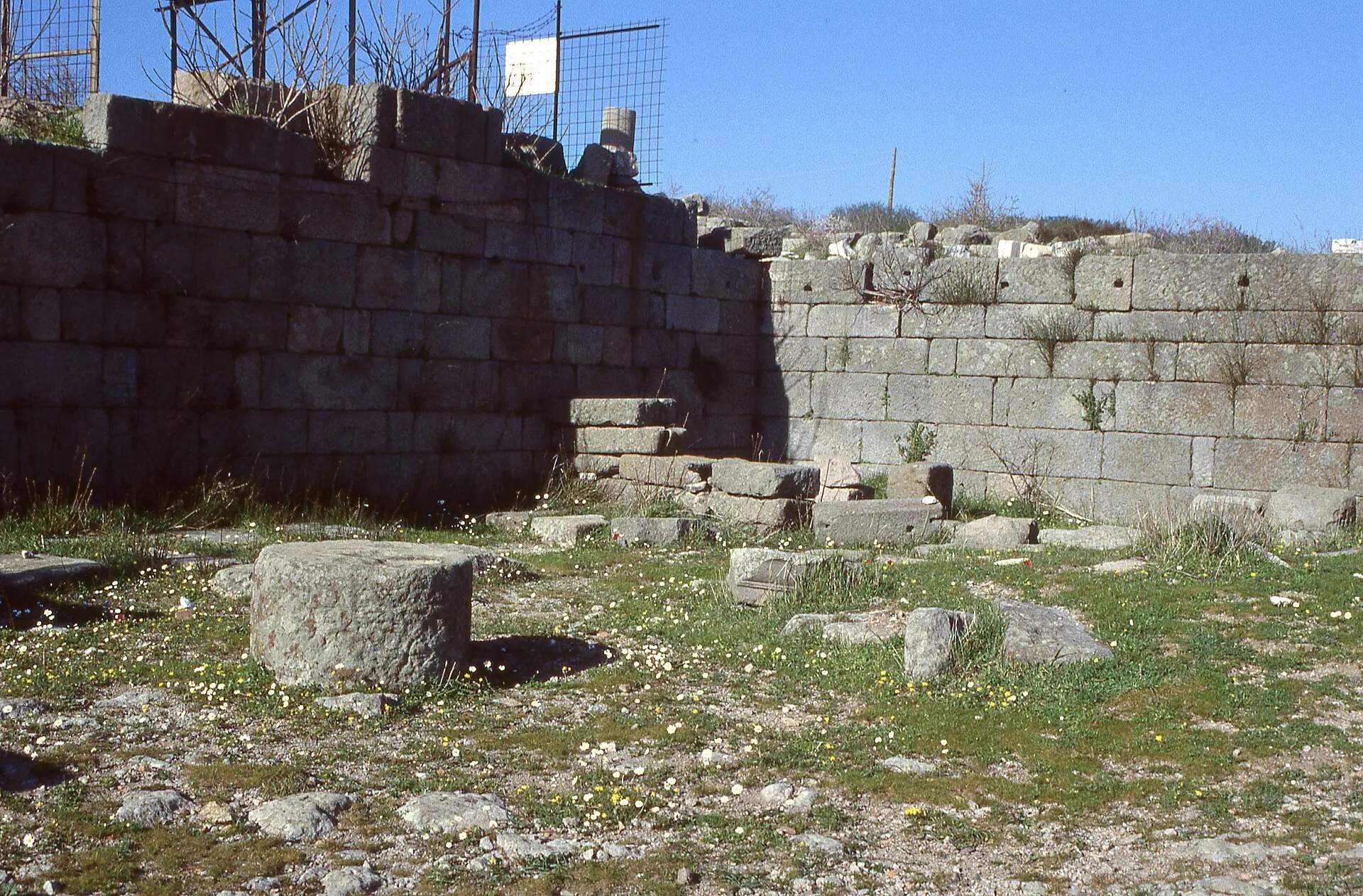
Sanctuary of Athena at Pergamon, northeast room behind the north stoa. Photo: Mark Landon, CC BY 4.0 (https://creativecommons.org/licenses/by/4.0/), via Wikimedia Commons: https://commons.wikimedia.org/wiki/File:Pergamon_Sanctuary_of_Athena_NE_room_behind_N_stoa.jpgDownload 1920px
Library of Pergamon
Bergama, Türkiye, About 220–159 BCE
lostreconstruction, imagined
Ruins on the Acropolis; UNESCO World Heritage Site
See it on the globeCompare with anotherRead the record1 books from here
Add to a shelf
A reconstruction, imagined
Drag to look around. Tap the round markers to learn what you are looking at.
Loading the room
Drag to look around. Tap a marker for detail.
- visitedGenerated image, not a photograph. Based on Richard Bohn's excavation report: a room 16.95 m deep and 13.53 m in clear width; a foundation 1.05 m wide along the three standing walls, about 0.50 m in from them; dowel holes; upright plates 0.465 to 0.47 m and cover plates 0.152 m; a projection 2.74 m wide and 1.05 m out in the middle of the north side; a statue base 1.19 m found in the rubble of the stoa. Bohn says the height of the racks cannot be given. The image shows empty wooden racks on a stone strip, a painted band on plastered walls over a marble plinth, and one base on the far wall with no statue. Contradicted: the racks stand against the walls, not 0.5 m in, and the base is a free-standing block, not a projection of the wall. The five shelf rows, the rack design, the wall finish, ceiling and floor are guesses
Book racks on the foundation
Shelf, in an imagined viewBohn found a foundation 1.05 m wide along the three standing walls of a room 16.95 m deep and 13.53 m wide, set about 0.50 m in from them, with dowel holes, and read it as the footing for wooden book racks. He says the height of the racks cannot be given. The image puts open wooden racks on a stone strip, but the strip runs against the wall instead of 0.5 m in from it. The five rows and the form of the racks are guesses.
This view is imagined. The thing described was found on the ground, and the source below says by whom.
excavated primary Source
Shelves, left empty
Shelf, in an imagined viewThe sources read give no find of books in this room, so the shelves are shown empty. The shelf pattern is a guess.
This view is imagined. The thing described is a guess. No source records it for this library.
invented primary Source
Wall finish
Object, in an imagined viewThe image shows plaster with a painted band under the ceiling over a marble plinth. Bohn's finds in this room are the foundation, the dowel holes and the stone plates. The sources read record no wall finish, so the plaster, the plinth, the band and the colours are guesses.
This view is imagined. The thing described is a guess. No source records it for this library.
invented primary Source
Where Bohn put Athena
Object, in an imagined viewBohn found a projection 2.74 m wide and 1.05 m out in the middle of the north side, and a statue base 1.19 m was found in the rubble of the stoa. The image has a plain block standing free in front of the far wall and no statue. A free block is not a projection of the wall, so it does not match.
This view is imagined. The thing described was found on the ground, and the source below says by whom.
excavated primary Source
Timber ceiling
Object, in an imagined viewExposed curved beams and boards. The roof and ceiling of the room are not known from the sources read, so this is a guess.
This view is imagined. The thing described is a guess. No source records it for this library.
invented primary Source
Take the evidence with you
Export this page's facts, sources, viewpoints, and any captured-camera position as a citable notebook or CSL JSON.
The record
Worth knowing
Library of Pergamon, worth knowing: An ancient report says Ptolemy imprisoned the Alexandrian scholar Aristophanes of Byzantium on suspicion of leaving for Pergamon.
Library of Pergamon, worth knowing: Crates of Mallus, a scholar from Pergamon, fell into a Roman sewer opening around 169 BC while on an embassy. He broke his leg.
Library of Pergamon, worth knowing: Pliny reports a story that Ptolemy banned papyrus exports and that parchment (charta pergamena) was invented at Pergamon as a substitute. The same page notes Herodotus says animal skins were used for writing long before.
Library of Pergamon, worth knowing: Strabo writes that the heirs of Neleus, who held the books of Aristotle and Theophrastus, hid them in a trench to keep them from the Attalid book-hunters. Moisture and moths damaged them.
Library of Pergamon, worth knowing: The rooms on the Athena terrace long taken for the royal library may not have been one. Later scholars have suggested a reception hall, a store for offerings or a display room.
What remains
Library of Pergamon, what remains: Ruins of the library on the Acropolis near the Sanctuary of Athena
Status today
Library of Pergamon, status today: Parchment (membrana) said to be invented at Pergamum amid book rivalry with the Ptolemies (Varro via Pliny NH 13.70)
Reconstruction
Library of Pergamon, reconstruction: Row of rooms north, behind the upper storey of the north stoa of the Athena sanctuary: one large hall at the east end, and to its west a group of three rooms; a small court with a separate room group (so-called art collection) lies west at stoa ground-floor level. Identification as the royal library (Bohn, Hoepfner) is disputed (Mielsch, Strocka).
Library of Pergamon, reconstruction: Library rooms lay in the Athena sanctuary directly north of (behind) the north stoa, on rising rock.
Library of Pergamon, reconstruction: Two-storey stoa in front of the room block: Bohn refers to its Untergeschoss (lower storey) and a collapsed Obergeschoss. Inscription block found in the lower storey / forecourt debris.
Library of Pergamon, reconstruction: Bohn, following Conze: chambers fronted by a colonnade were typical in the Hellenistic-Roman period; parallels named: Serapeum library at Alexandria, Villa of the Papyri (Weber plan), Vitruvius VI.7.
Library of Pergamon, reconstruction: Block of three rooms plus a larger fourth room to the east; Bohn counts four library rooms ("vier Bibliotheksräume").
Library of Pergamon, reconstruction: Fourth room: depth 16.95 m, clear width 13.53 m (Bohn 1885). Wikipedia gives 13.6 x 15.2 m for the main room.
Library of Pergamon, reconstruction: Trachyte rear wall 1.05 m thick, running parallel to the stoa rear wall 14.40 m from its front edge; in places 8 courses (courses 0.30-0.44 m) survive.
Library of Pergamon, reconstruction: North wall: two slot holes 0.95 m above floor; a second row of 0.06 m square holes, 0.14 m deep, 1.05 m apart, also along the east wall. Bohn reads them as anchors for wooden shelving.
Library of Pergamon, reconstruction: Along the three standing walls, ~0.50 m from the wall, a foundation 1.05 m wide with dowel holes; upright slabs 0.465-0.470 m high and cover slabs 0.152 m high found nearby. Bohn: base for wooden book racks with a 0.50 m air gap.
Library of Pergamon, reconstruction: Central projection on the north wall: 2.74 m wide, projecting 1.05 m from the continuous foundation; Bohn takes it as the Athena statue stand.
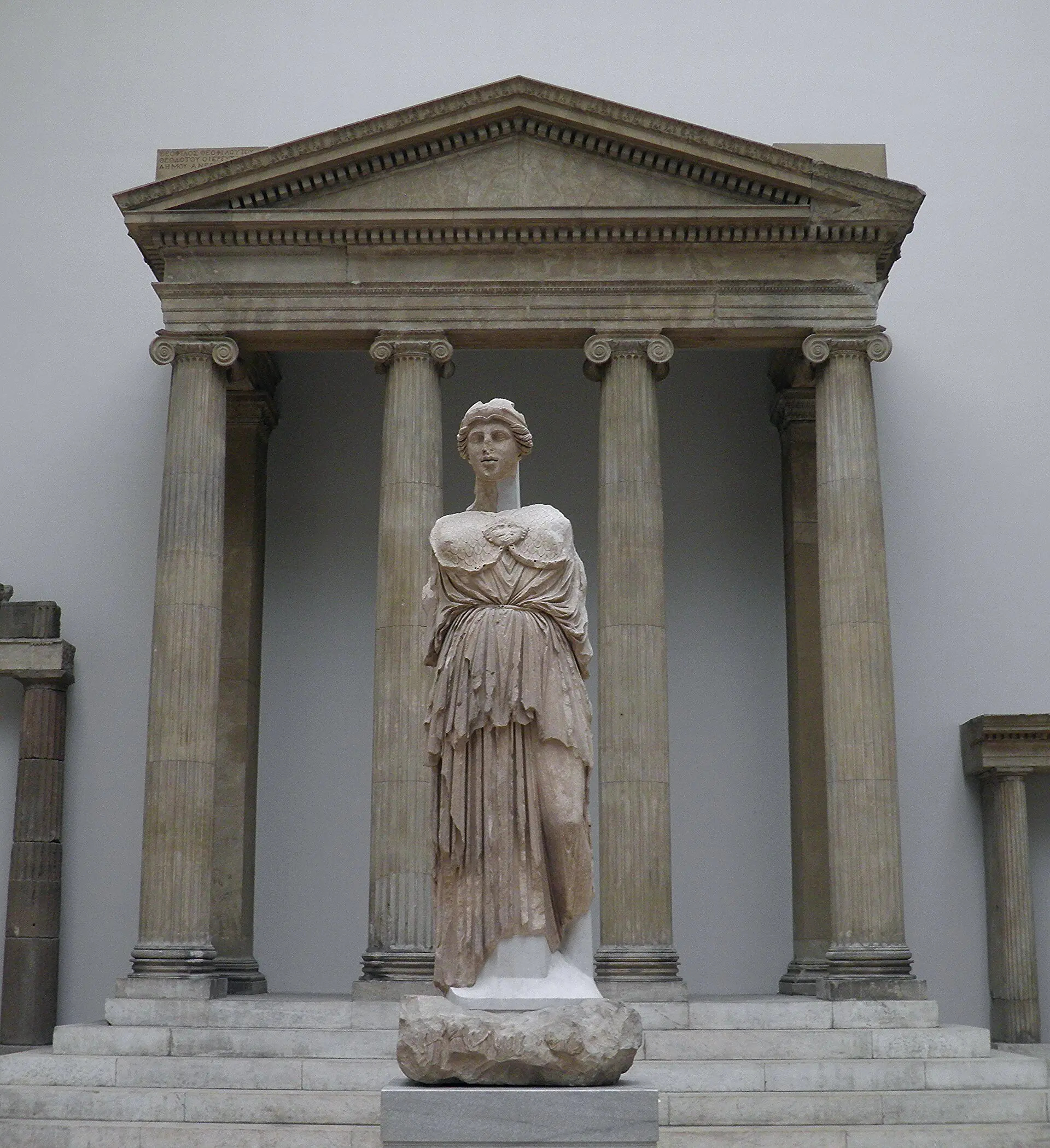
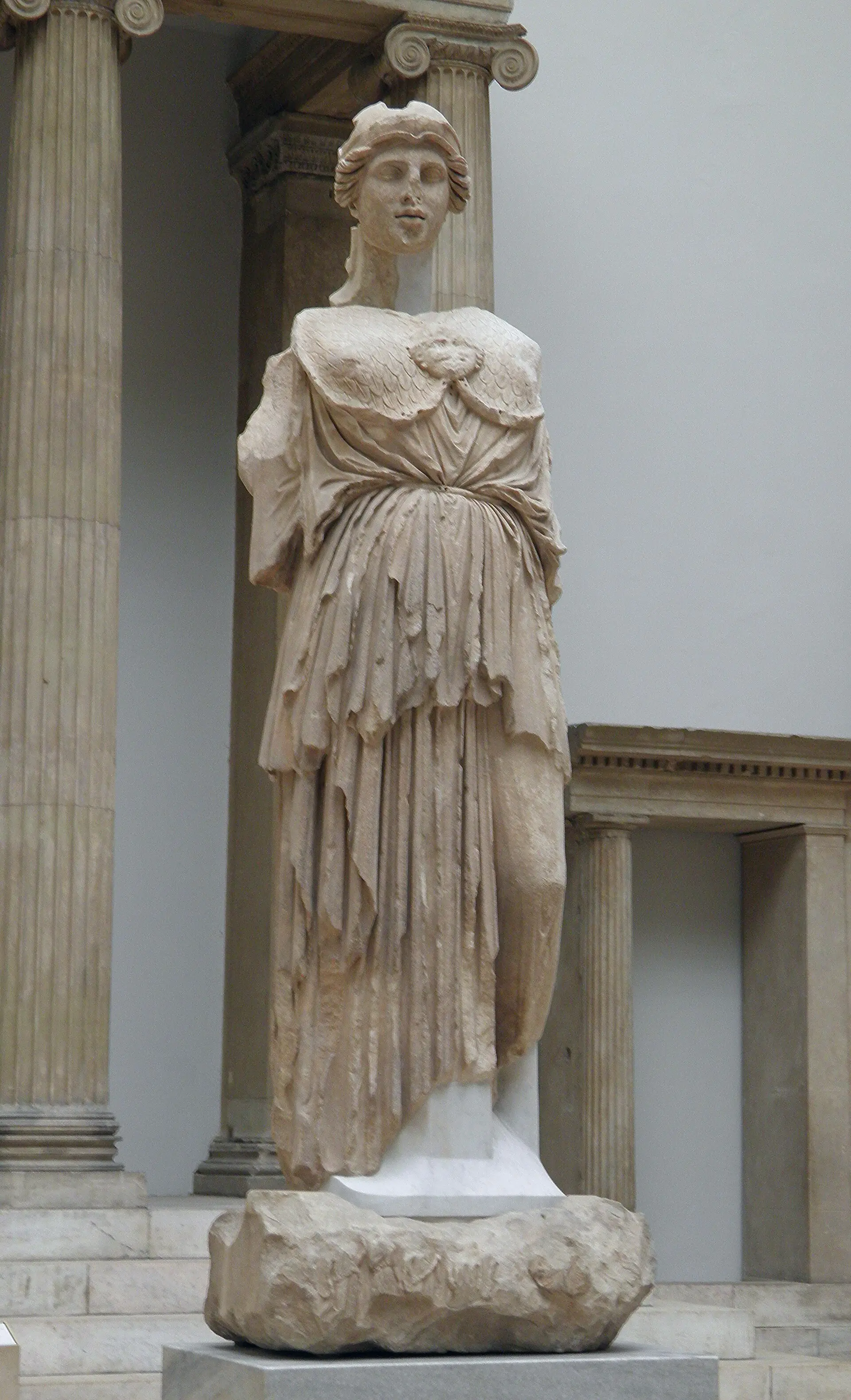
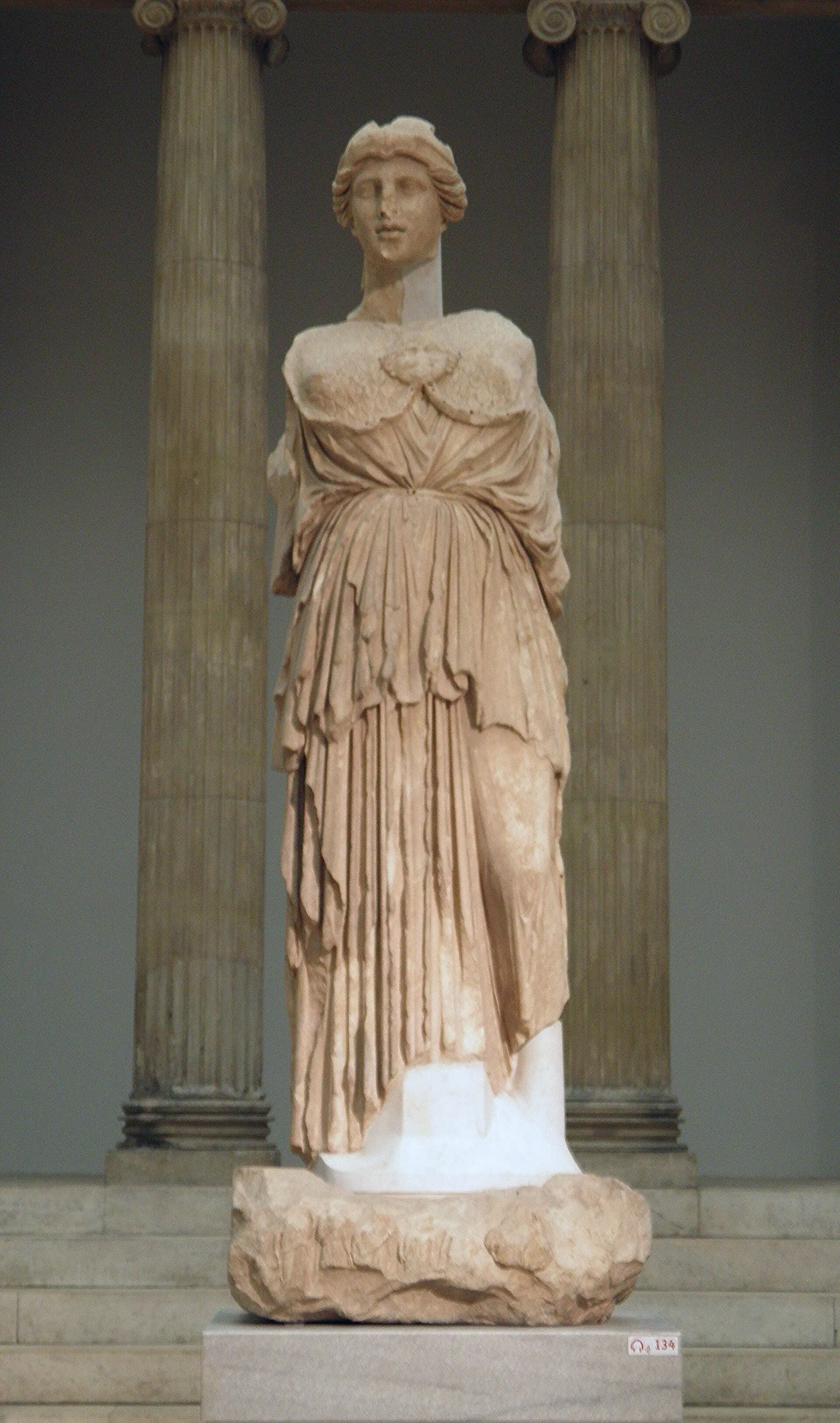
Library of Pergamon, reconstruction: Colossal Athena statue with figured base found in stoa debris directly in front of the room (about 2 m above lower-storey floor).
Library of Pergamon, reconstruction: Bohn conjectures only the wall plinth was clad in marble blocks, the upper wall plastered and painted (inferred from a parallel); trachyte backing wall.
Library of Pergamon, reconstruction: Bohn: walls abut rising ground (damp); the 0.50 m gap between wall and shelves would mitigate. Terracotta pipes (Thonrohrleitungen) belonged to the rooms.
Library of Pergamon, reconstruction: Ancient cistern cut deep into the rock near the south-east corner of the main room; rock-cut channel with collecting holes in front of the east part of the podium.
What happened here
197 BCLibrary of Pergamon, built, 197 BC: Library built under Eumenes II (r. 197-160 BCE); Wikipedia gives 220-159 BCE
32 BCLibrary of Pergamon, lost, 32 BC: Plutarch: Antony accused of giving Cleopatra the libraries of Pergamum (200,000 volumes); an accusation, not confirmed fact
262Library of Pergamon, destroyed, 262: Earthquake then Goths; library "did not survive"
1885Library of Pergamon, excavated, 1885: Excavations 1885-1890 (German); restored 1950-1985
Photographs

Use this photo
Athena Parthenos statue from the Library of Pergamon. Photo: Carole Raddato from FRANKFURT, Germany, CC BY-SA 2.0 (https://creativecommons.org/licenses/by-sa/2.0/), via Wikimedia Commons: https://commons.wikimedia.org/wiki/File:Statue_of_Athena_Parthenos_from_the_Library_of_Pergamon_with_the_temple_of_Zeus_Sosipolis_from_Magnesia_on_the_Maeander_in_the_background,_Pergamon_Museum_Berlin_(8404209815).jpgDownload 1920px

Use this photo
Athena Parthenos from the Library of Pergamon, Pergamon Museum. Photo: Carole Raddato from FRANKFURT, Germany, CC BY-SA 2.0 (https://creativecommons.org/licenses/by-sa/2.0/), via Wikimedia Commons: https://commons.wikimedia.org/wiki/File:Statue_of_Athena_Parthenos_from_the_Library_of_Pergamon,_Pergamon_Museum_Berlin_(8404207129).jpgDownload 1920px

Use this photo
Hellenistic copy of Athena Parthenos from the Pergamon library. Photo: Carole Raddato from FRANKFURT, Germany, CC BY-SA 2.0 (https://creativecommons.org/licenses/by-sa/2.0/), via Wikimedia Commons: https://commons.wikimedia.org/wiki/File:Statue_of_Athena_Parthenos_from_the_Library_of_Pergamon,_Pergamon_Museum_Berlin_(8404177763).jpgDownload 1920px
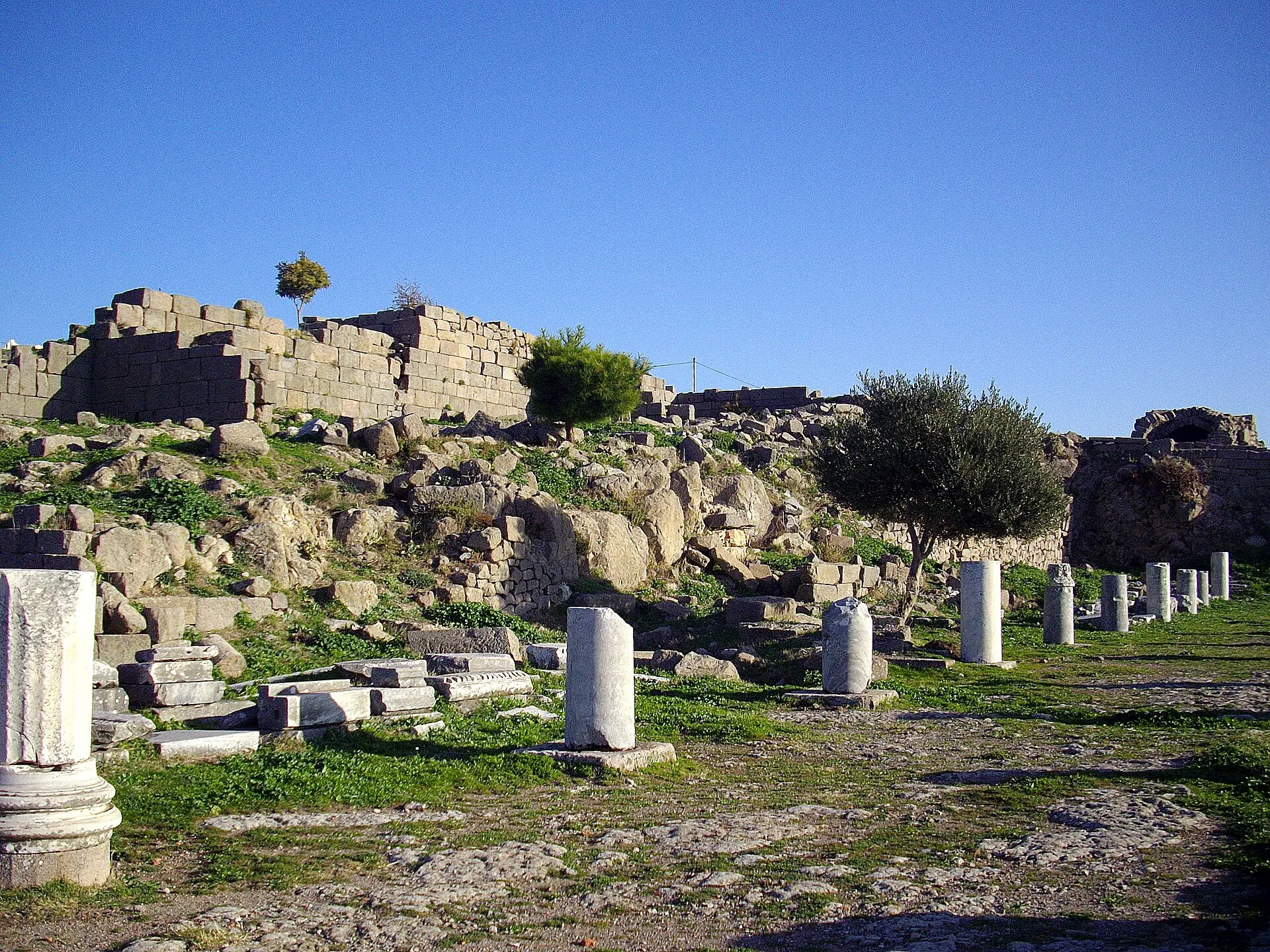

Use this photo
The Acropolis of Pergamon, Bergama. Photo: ykeiko, CC BY-SA 3.0 (https://creativecommons.org/licenses/by-sa/3.0/), via Wikimedia Commons: https://commons.wikimedia.org/wiki/File:The_Acropolis_of_Pergamum_(Pergamon)_-_panoramio.jpgDownload 1920px
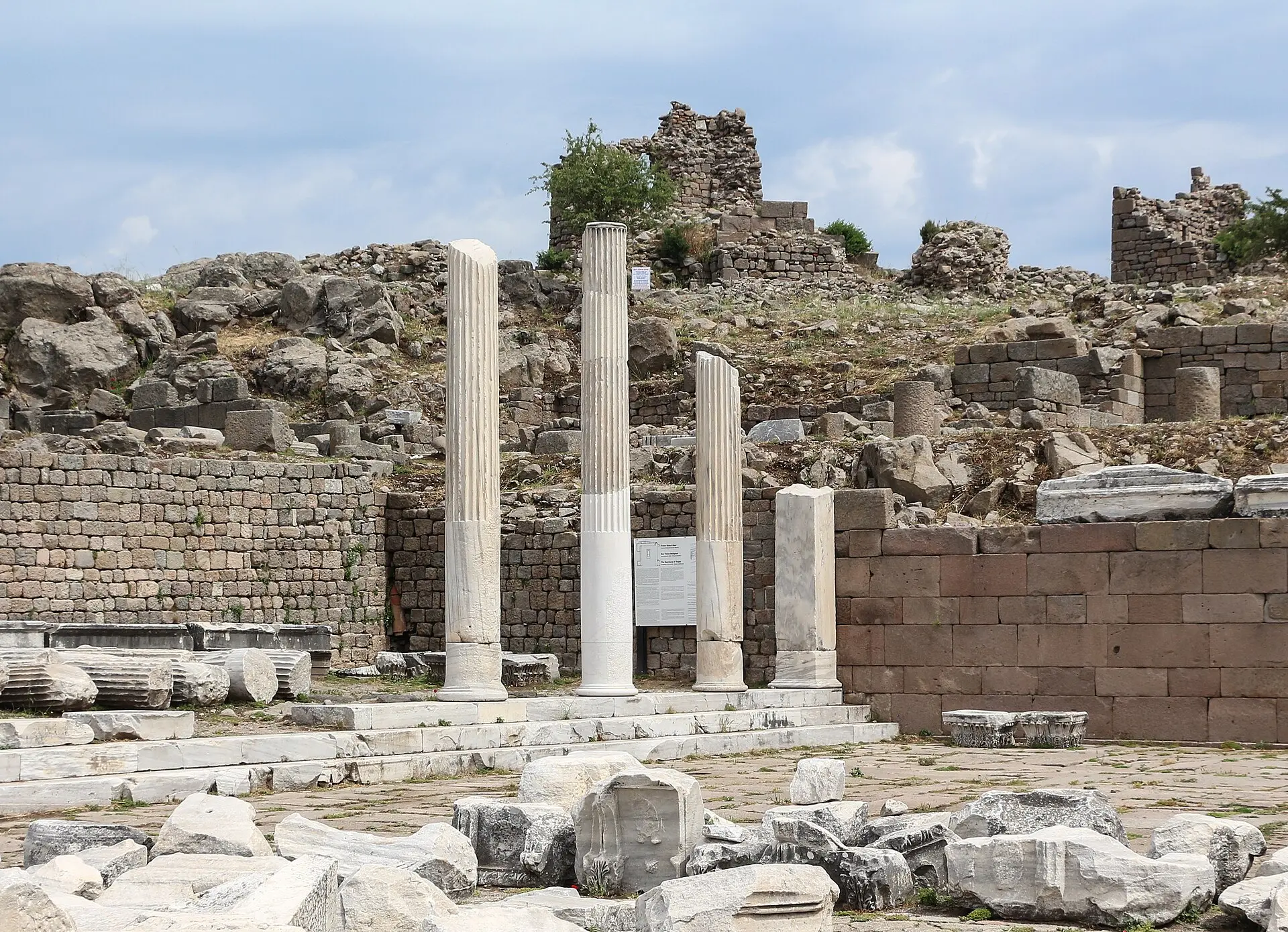

Use this photo
Temple of Trajan on the Pergamon acropolis. Photo: Bernard Gagnon, CC BY-SA 3.0 (https://creativecommons.org/licenses/by-sa/3.0/), via Wikimedia Commons: https://commons.wikimedia.org/wiki/File:Temple_of_Trajan,_Pergamon_01.jpgDownload 1920px
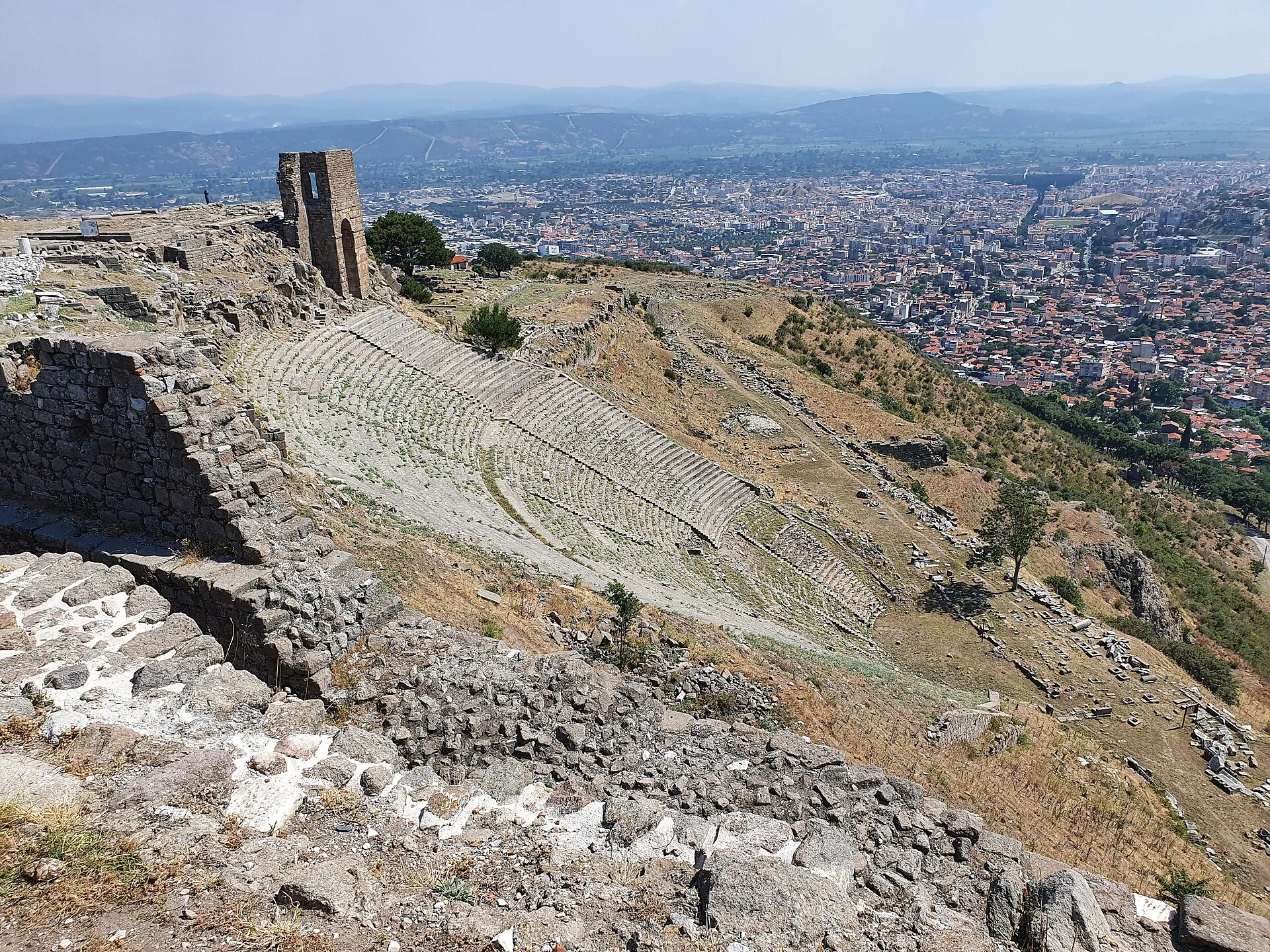

Use this photo
Hellenistic theatre on the Pergamon acropolis, with the Temple of Trajan above and Bergama below. Photo: Antoloji, CC BY-SA 4.0 (https://creativecommons.org/licenses/by-sa/4.0/), via Wikimedia Commons: https://commons.wikimedia.org/wiki/File:Acropolis_amphitheatre_of_Pergamon_(2020).jpgDownload 1920px
Books from this library
Sources
- https://penelope.uchicago.edu/Thayer/L/Roman/Texts/Pliny_the_Elder/13*.html
- https://en.wikipedia.org/w/index.php?title=Library_of_Pergamum&action=raw
- https://arachne.dainst.org/entity/6172
- https://archive.org/download/dasheiligtumder00droygoog/dasheiligtumder00droygoog_djvu.txt
- https://penelope.uchicago.edu/encyclopaedia_romana/greece/paganism/pergamumlibrary.html
- https://penelope.uchicago.edu/Thayer/E/Roman/Texts/Strabo/13A3*.html
- https://penelope.uchicago.edu/Thayer/E/Roman/Texts/Plutarch/Lives/Antony*.html