Use this photo
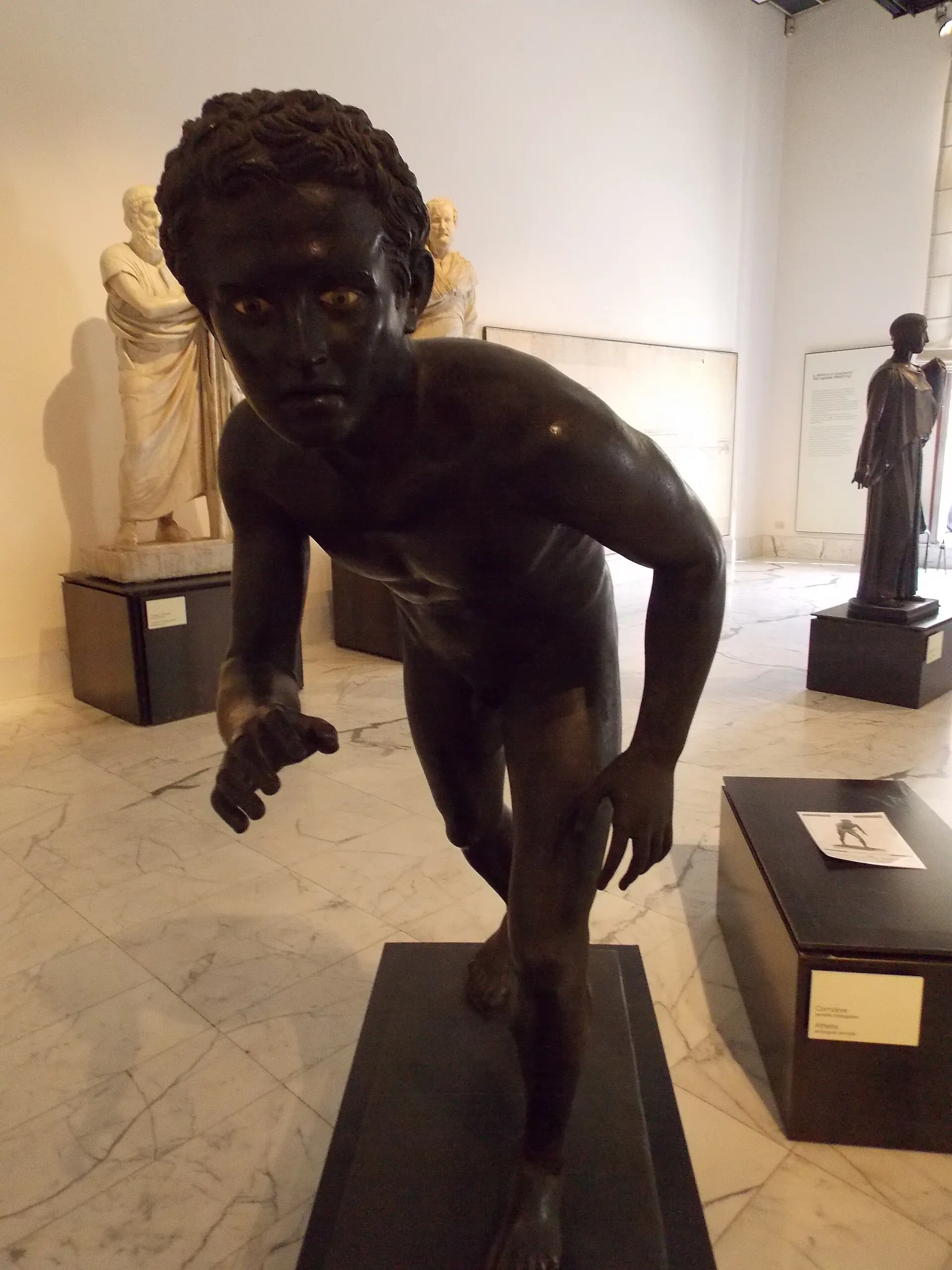
Bronze runner from the Villa of the Papyri, Naples museum. Photo: NatalyaSole, CC BY-SA 3.0 (https://creativecommons.org/licenses/by-sa/3.0/), via Wikimedia Commons: https://commons.wikimedia.org/wiki/File:Bronze_runner_from_the_Villa_of_the_Papyri_(Herculaneum).jpgDownload 1920px
Villa of the Papyri
Herculaneum, Italy, Buried by Vesuvius in 79 CE
lostreconstruction, imagined
PHerc. 1667 virtually unwrapped and read in full, 22 columns, June 2026; villa mostly still buried
See it on the globeFollow the collectionCompare with anotherRead the record4 books from here
Add to a shelf
A reconstruction, imagined
Drag to look around. Tap the round markers to learn what you are looking at.
Loading the room
Drag to look around. Tap a marker for detail.
- visitedGenerated image, not a photograph. Based on the excavation record as later accounts report it (the Getty Museum, and Wikipedia citing Amedeo Maiuri): the rolls lay in wooden capsae, some on shelves around the walls and some on the two sides of a set of shelves in the middle of the room. Wikipedia counts over 1,800 rolls; the Getty gives approximately 1,100 recovered between 1752 and 1754. No dimensions were found in the sources read. The image shows wall shelves, a central double-sided unit and charred black rolls. Contradicted: some rolls on the left and rear shelves are pale tan, as if unburnt, and the image shows the room before the eruption while the carbonised state came after it. The panelled cabinet doors with knobs and the red marble skirting are not in any source. The room's size, cabinet height, wall finish and floor are guesses
Shelves around the walls
Shelf, in an imagined viewWikipedia, citing Amedeo Maiuri, says the rolls lay in wooden capsae, some of them on shelves around the walls. It counts over 1,800 rolls. The image has open wooden shelves with cupboards below, holding stacks of rolls. The shelf heights, the panelled cupboard doors and their knobs are guesses.
This view is imagined. The thing described was found on the ground, and the source below says by whom.
excavated wikipedia Source
Double-sided shelf unit
Shelf, in an imagined viewMaiuri, as Wikipedia reports him, puts some rolls on the two sides of a set of shelves in the middle of the room. The image has a free-standing unit with rolls on two sides. Its size and shape are guesses.
This view is imagined. The thing described was found on the ground, and the source below says by whom.
excavated wikipedia Source
Charred rolls
Shelf, in an imagined viewThe Getty gives approximately 1,100 carbonized rolls recovered between 1752 and 1754, many of them writings of Philodemus of Gadara. The image shows mostly dark, charred rolls here, which fits the find. Whether the room held them in this stacked form is not known.
This view is imagined. The thing described was found on the ground, and the source below says by whom.
excavated secondary Source
Pale rolls, a mismatch
Object, in an imagined viewSome rolls on the left and rear shelves are pale tan, as intact papyrus would be. The real rolls were charred black by the eruption of AD 79. These do not match the record.
This view is imagined. The thing described is a guess. No source records it for this library.
invented secondary Source
Plain plaster
Object, in an imagined viewPlain cream plaster walls, a red marble skirting and a smooth vaulted ceiling. No wall finish from this room appears in the sources read, so all of it is a guess.
This view is imagined. The thing described is a guess. No source records it for this library.
invented secondary Source
Mosaic floor
Object, in an imagined viewThe Getty shows an in-situ mosaic floor with a meander in room O of the Villa, first century BC. It does not say which room held the rolls. A floor of this kind is borrowed here from elsewhere in the building. The pattern drawn is a guess.
This view is imagined. The thing described is borrowed from a comparable building. The source below describes that building, not this one.
comparandum secondary Source
Where the books are now
Surviving items, by the institution that holds them today. Each line has its source and how well it is proven.
- Biblioteca nazionale Vittorio Emanuele III Naples, Italy
Bulk of the surviving papyri, in the Office of Herculaneum papyri
- Institut de France Paris, France
Six rolls given to Napoleon in 1802-03 Count: 6
- Bodleian Library Oxford, United Kingdom
Four unrolled papyri presented by George IV in 1810 Count: 4
- British Library London, United Kingdom
Most of the other unrolled papyri given to George IV in 1810
Take the evidence with you
Export this page's facts, sources, viewpoints, and any captured-camera position as a citable notebook or CSL JSON.
The record
Worth knowing
Villa of the Papyri, worth knowing: Early excavators took the carbonised scrolls for logs or fishing nets. Many were thrown away before one was dropped and broke open.
Villa of the Papyri, worth knowing: The Getty calls the scrolls from the Villa of the Papyri the only surviving library from the classical world.
Villa of the Papyri, worth knowing: The same villa also gave up the largest collection of statuary ever recovered from one classical building.
Villa of the Papyri, worth knowing: The villa was excavated by tunnelling. Convicts and conscripts dug the shafts and tunnels under Karl Weber.
Volumes
Villa of the Papyri, volumes: more than 1,800 scrolls; official list 1,814 rolls and fragments
What remains
Villa of the Papyri, what remains: Villa only partly excavated; much of it still buried
Status today
Villa of the Papyri, status today: Herculaneum Conservation Project (Packard Humanities Institute + Parco Archeologico di Ercolano) active at Ercolano since 2001
Reconstruction
Villa of the Papyri, reconstruction: Books were largely concentrated in one small room furnished with book cabinets (review of Sider, peer-reviewed venue).
Villa of the Papyri, reconstruction: Getty: some scrolls neatly stacked on shelves or in cases when found; early excavators mistook them for logs.
Villa of the Papyri, reconstruction: Wooden capsae on shelves around the walls and on a central double-sided shelf unit in the room.
Villa of the Papyri, reconstruction: Per Weber plan as described by Bohn 1885: library room lies behind a colonnade with a door opening into it.
Villa of the Papyri, reconstruction: Karl Weber recorded findspots and architectural contexts (Getty).
What happened here
79Villa of the Papyri, sealed, 79: Vesuvius eruption buries villa and library under ~20 m of ash
1750Villa of the Papyri, rediscovered, 1750: Villa found 1750 by well-diggers; first scrolls 1752
1750Villa of the Papyri, excavated, 1750: Tunnel excavations under Alcubierre and Weber, halted 1765
1986Villa of the Papyri, rediscovered, 1986: Villa relocated through an ancient well
1990Villa of the Papyri, excavated, 1990: 1990s dig reveals two lower floors with frescoes in situ
Photographs

Use this photo
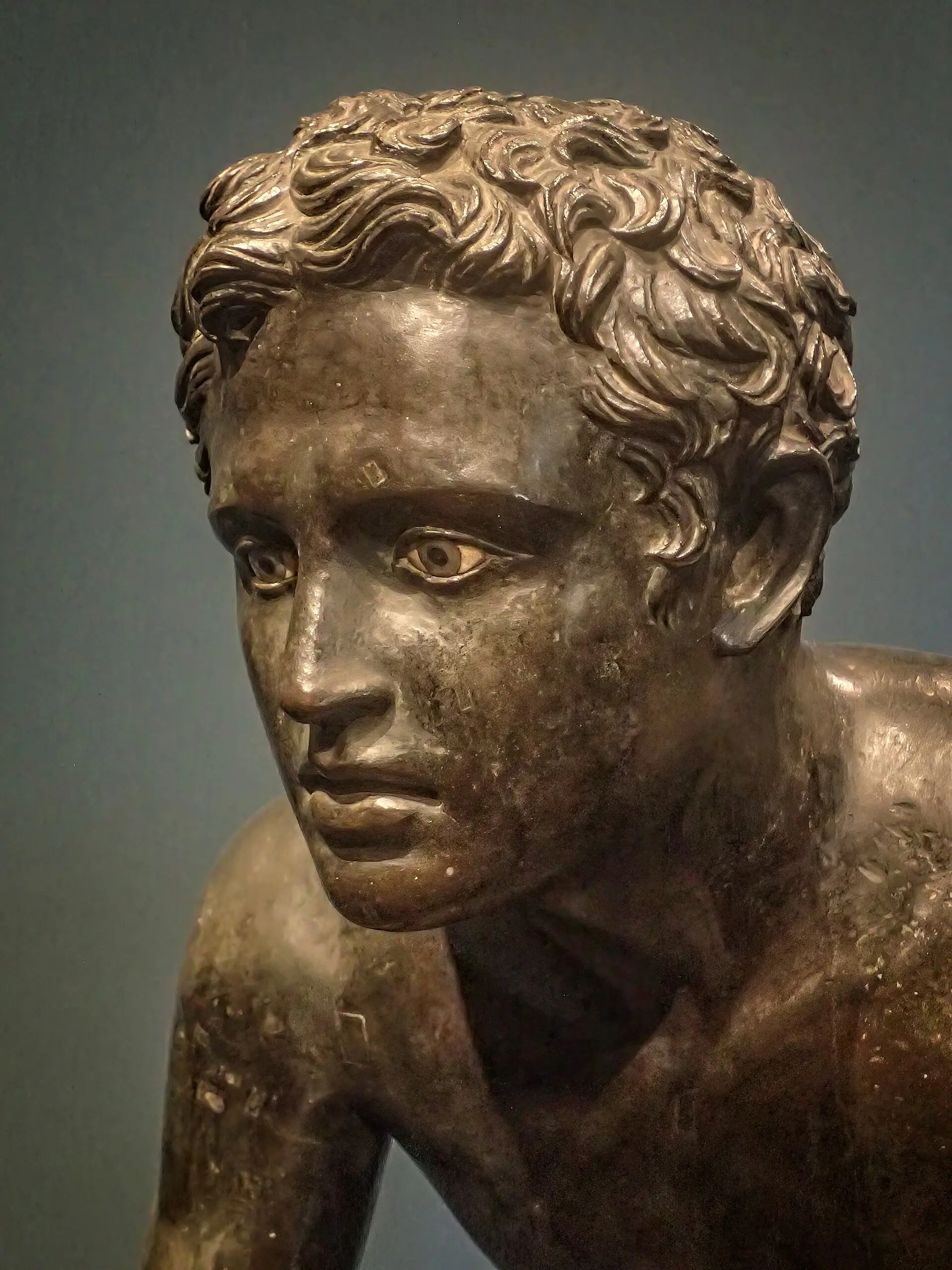
Bronze athlete from the Villa of the Papyri, Herculaneum. Photo: Mary Harrsch, CC BY-SA 4.0 (https://creativecommons.org/licenses/by-sa/4.0/), via Wikimedia Commons: https://commons.wikimedia.org/wiki/File:Bronze_portrait_of_young_athlete_recovered_from_the_Villa_dei_Papyri_in_the_1754_excavations_04.jpgDownload 1920px

Use this photo
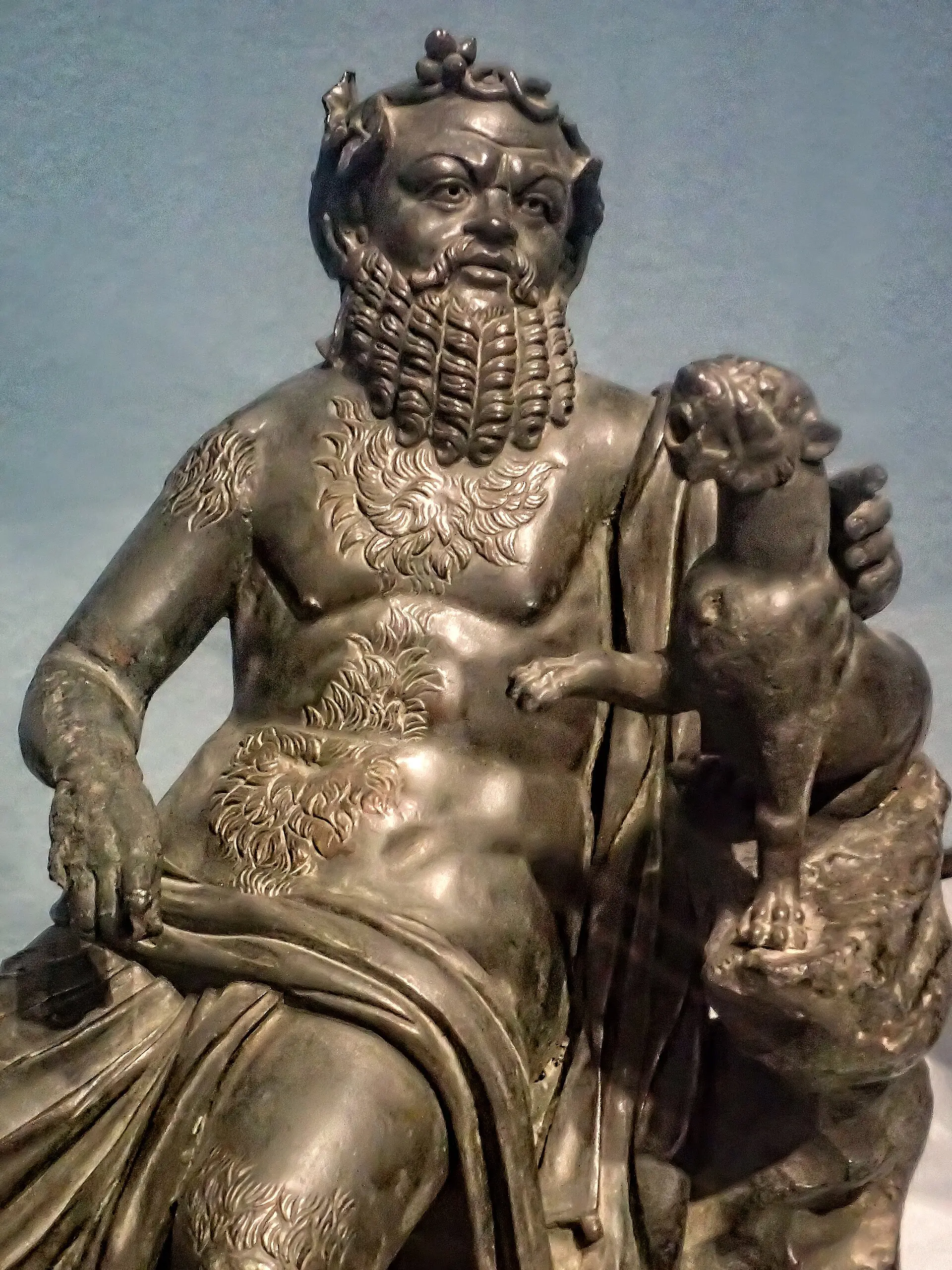
Bronze satyr from the Villa of the Papyri garden. Photo: Mary Harrsch, CC BY-SA 4.0 (https://creativecommons.org/licenses/by-sa/4.0/), via Wikimedia Commons: https://commons.wikimedia.org/wiki/File:Original_bronze_fountain_ornament_depicting_a_satyr_with_panther_found_in_a_garden_of_the_Villa_dei_Papyri_in_Herculaneum_in_1754._Roman_1st_century_BCE_-_1st_century_CE._Photographed_at_the_%22Buried_by_Vesuvius%22_exhibit_-_2.jpgDownload 1920px

Use this photo
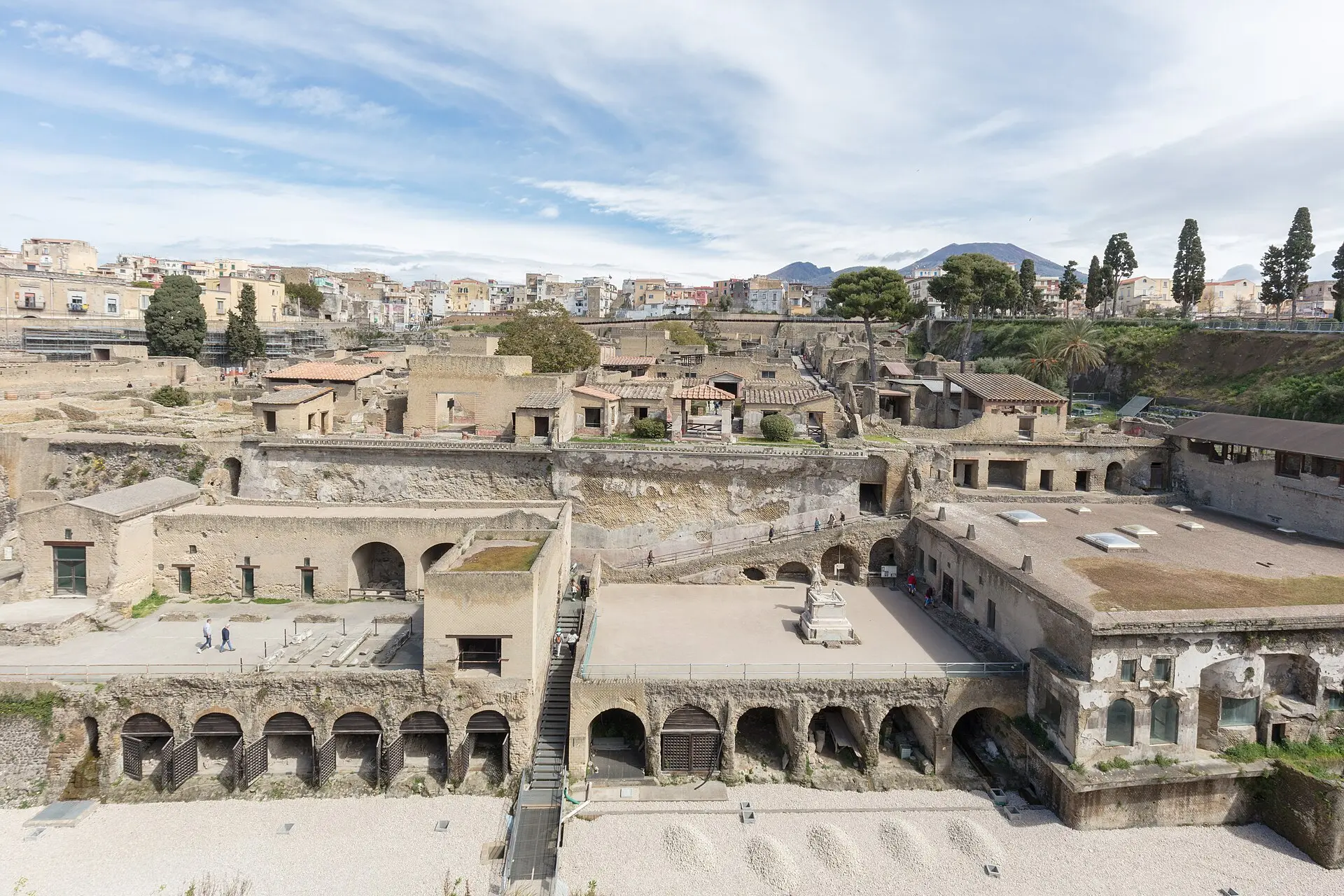
Excavated ancient city of Herculaneum, Italy. Photo: Diego Delso, CC BY-SA 4.0 (https://creativecommons.org/licenses/by-sa/4.0/), via Wikimedia Commons: https://commons.wikimedia.org/wiki/File:Antigua_ciudad_de_Herculano,_Italia,_2023-03-27,_DD_141.jpgDownload 1920px
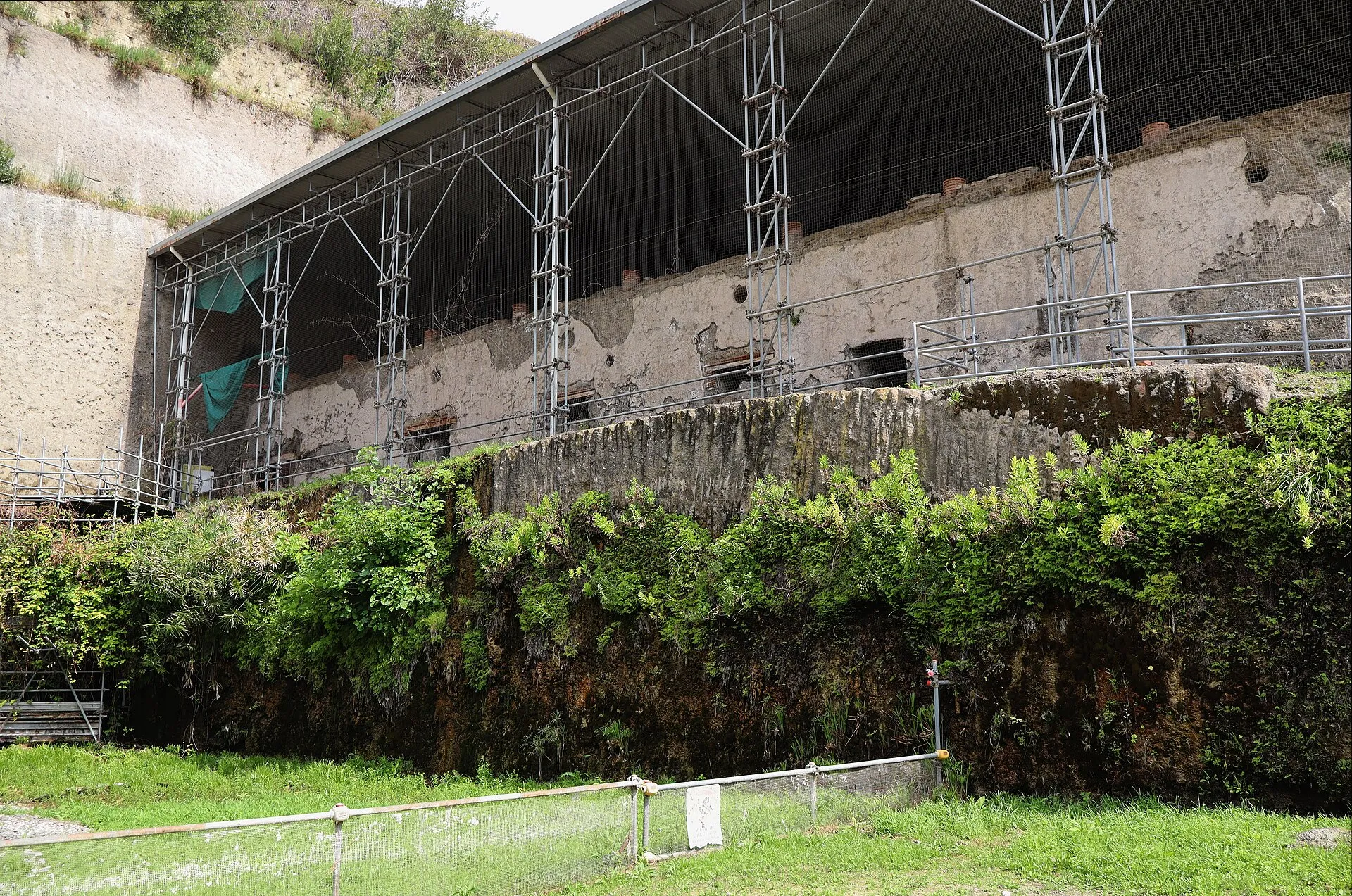

Use this photo
Excavated wall of the Villa of the Papyri under a protective roof, Herculaneum. Photo: Villa of the Papyri, CC BY-SA 4.0 (https://creativecommons.org/licenses/by-sa/4.0/), via Wikimedia Commons: https://commons.wikimedia.org/wiki/File:Villa_of_the_Papyri.jpgDownload 1920px
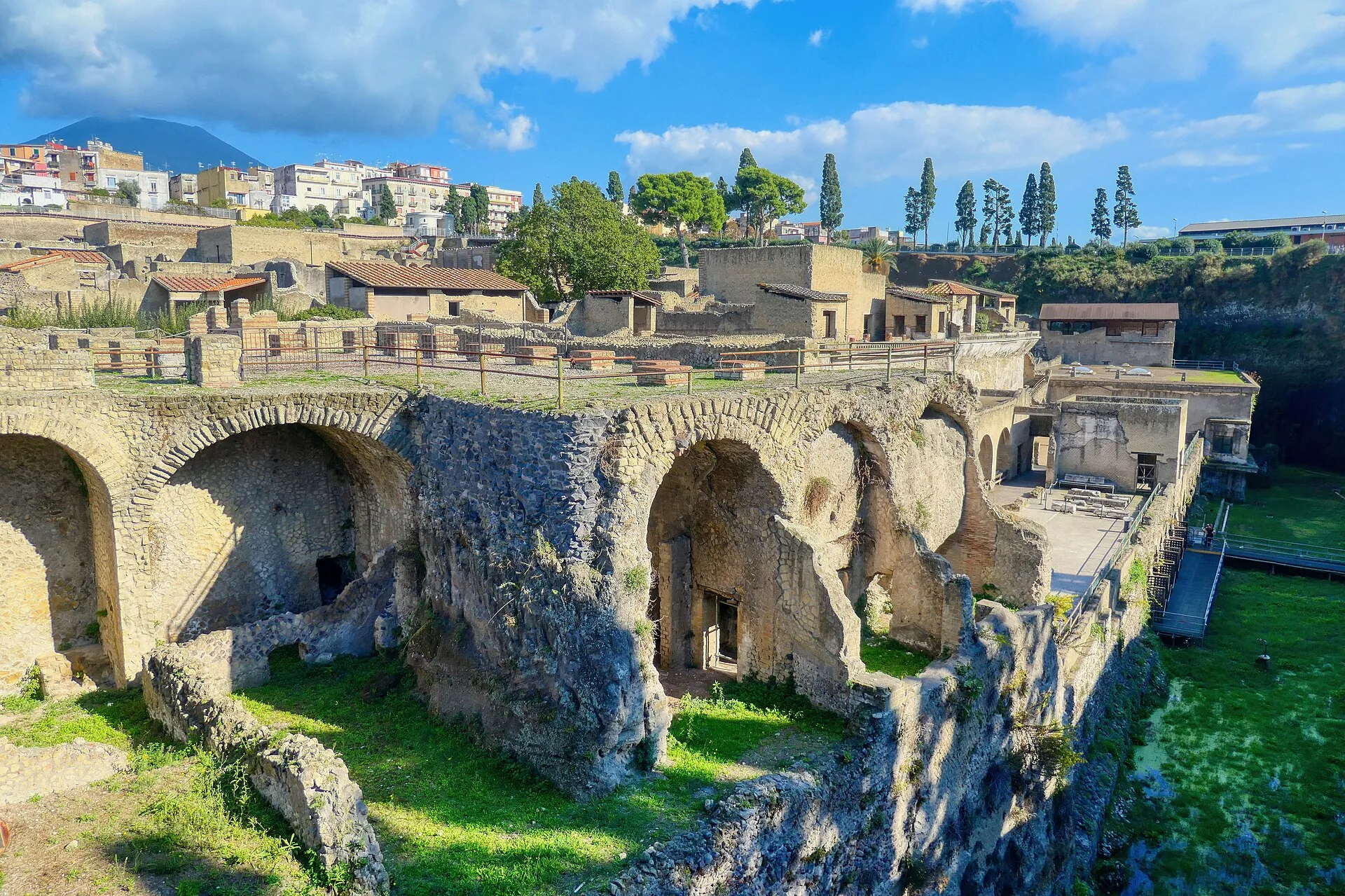

Use this photo
Arched boat sheds on the ancient shoreline of Herculaneum, Vesuvius behind. Photo: Bruno Rijsman, CC BY-SA 2.0 (https://creativecommons.org/licenses/by-sa/2.0/), via Wikimedia Commons: https://commons.wikimedia.org/wiki/File:Herculaneum_(Italy,_October_2020)_-_40_(50542981938).jpgDownload 1920px
Books from this library
- Herculaneum papyri (bulk of the collection)Philodemus and others1st century BCEP.Herc. seriescatalogue record
- PHerc. Paris. 4 (text read 2023)1st century BCEPHerc. Paris. 4catalogue record
- PHerc. 1667 (Scroll 4)1st century BCEPHerc. 1667catalogue record
- Oxford Facsimiles of the Herculaneum PapyriJohn Hayter (copies)1802-1806catalogue record
Sources
- https://www.herculaneum.org/
- https://en.wikipedia.org/w/index.php?title=Herculaneum_papyri&action=raw
- https://en.wikipedia.org/w/index.php?title=Villa_of_the_Papyri&action=raw
- https://bmcr.brynmawr.edu/2006/2006.01.41/
- https://www.getty.edu/art/exhibitions/villa_papiri/inner.html
- https://en.wikipedia.org/wiki/Villa_of_the_Papyri
- https://archive.org/download/dasheiligtumder00droygoog/dasheiligtumder00droygoog_djvu.txt
- https://scrollprize.org/