WorldLibsLibrariesBooksVisitGlobeShelfSearch
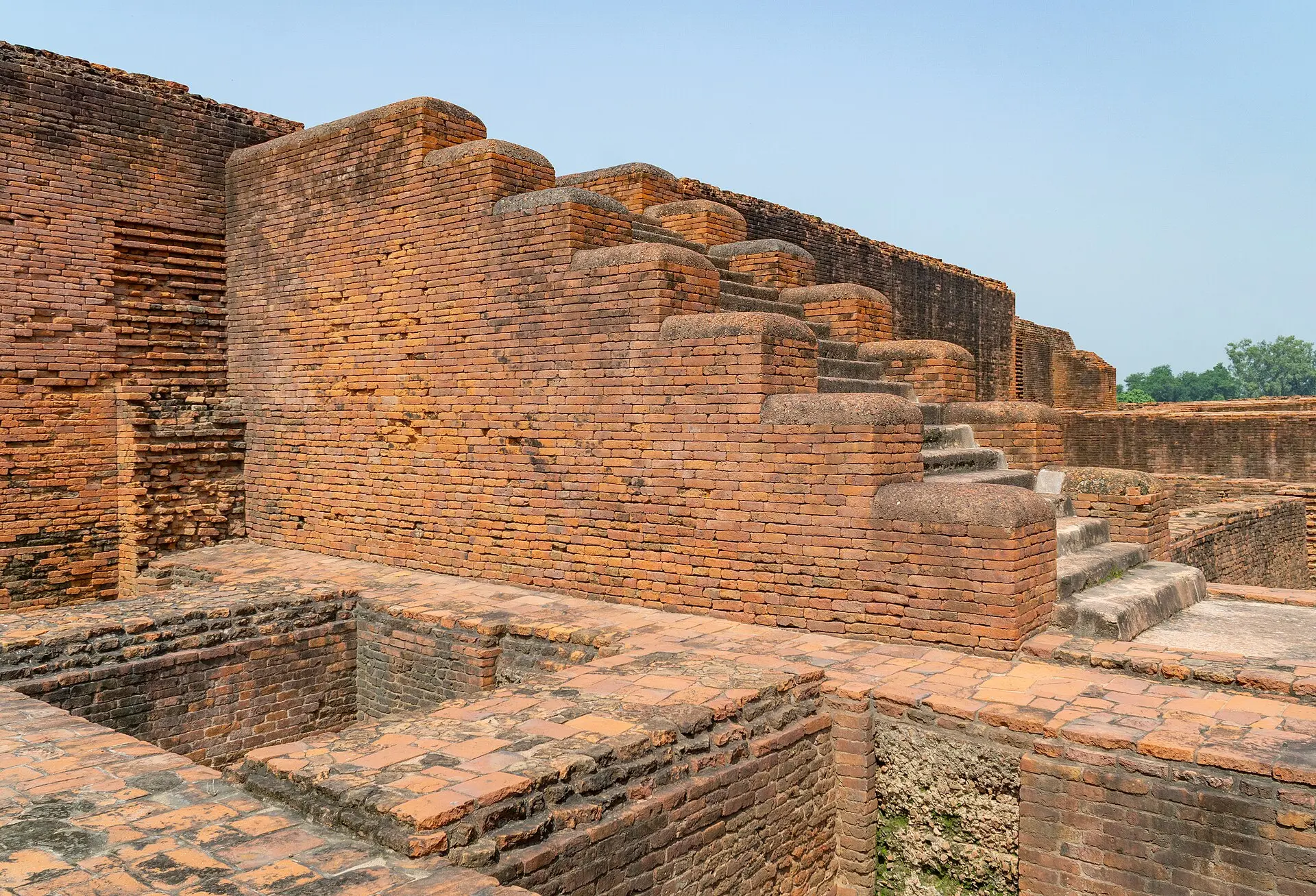
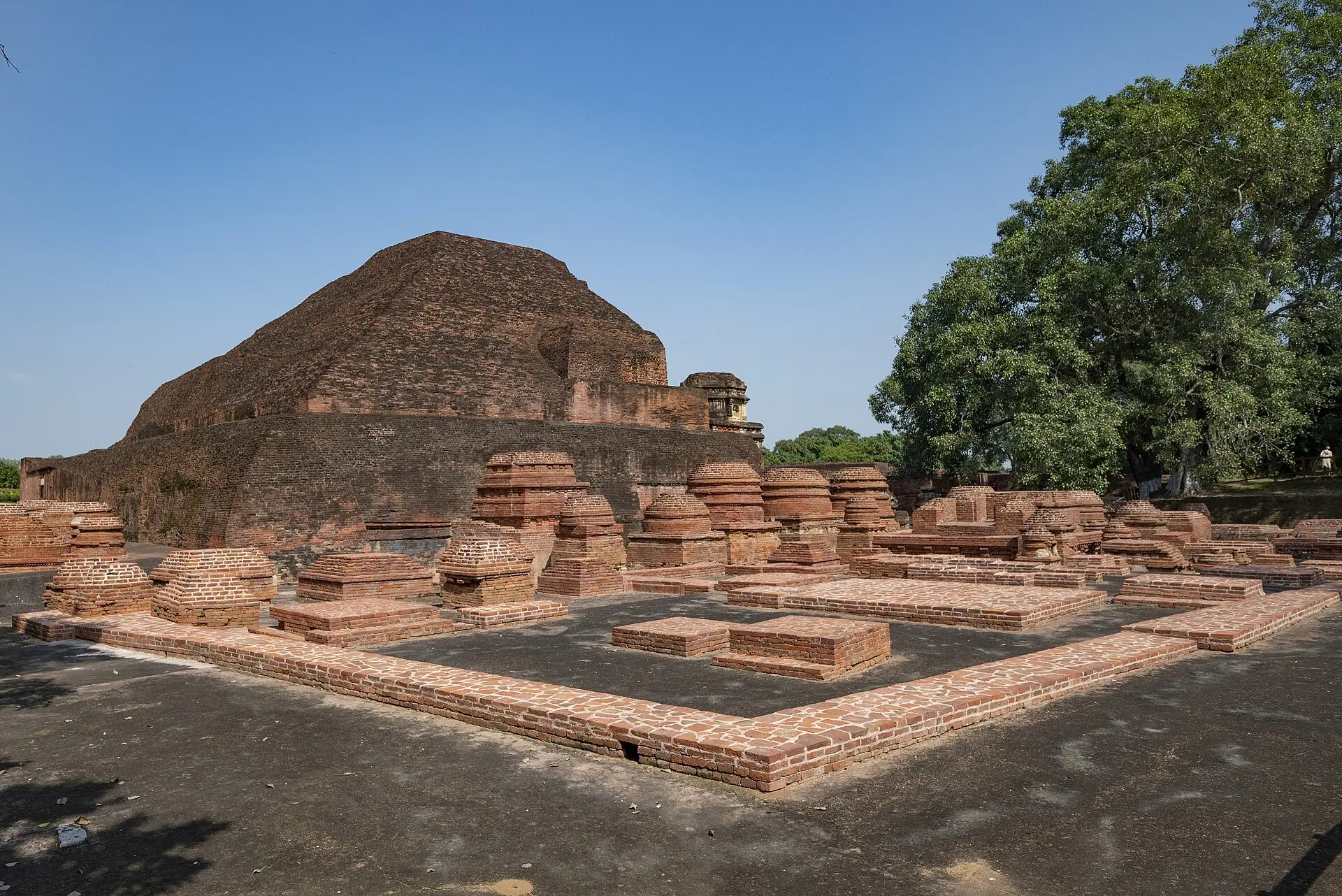
Monastery 1 granary, Nalanda Mahavihara
Monastery 1 granary, Nalanda Mahavihara. Sumitsurai, CC BY-SA 4.0
Use this photo
Monastery 1 granary, Nalanda Mahavihara. Photo: Sumitsurai, CC BY-SA 4.0 (https://creativecommons.org/licenses/by-sa/4.0/), via Wikimedia Commons: https://commons.wikimedia.org/wiki/File:Monastery_1_-_Granary_-_Nalanda_Mahavihara_(1).jpg
Download 1920px

Nalanda

Bihar, India, About 427 CE

lostreconstruction, imagined

UNESCO World Heritage Site; ASI-managed ruins open to visitors

See it on the globeCompare with anotherRead the record1 books from here

Add to a shelf
Your shelves
See your shelves

A reconstruction, imagined

Drag to look around. Tap the round markers to learn what you are looking at.

Loading the room

  1. Generated image, not a photograph. Based on the excavated monastery plan: a rectangular building round a central court with a verandah, an outer row of monks' cells, a shrine chamber facing the entrance, a well and drains, and staircases in the south-west corner. The three library buildings (Dharmaganja) are known only from later Tibetan tradition and none has been found. The image shows two storeys of cells, a central shrine with a seated Buddha, a stair and a well with drains. The walls look curved because of the image projection, not because the court was round. Some columns stand free under bare sky and carry nothing. Brick pillars, the stair position, the roofless tops, the shrine niche and the paving are guesses
    • Row of monks' cells

      Object, in an imagined view

      Every excavated monastery at Nalanda is a rectangle with a central court, a verandah and an outer row of cells for the monks. The image shows two storeys of open cells with small niches round the court. The count, size and doorways are not tied to one monastery.

      This view is imagined. The thing described was found on the ground, and the source below says by whom.

      excavated wikipedia Source

    • The pillared verandah

      Object, in an imagined view

      Excavators found a pillared verandah around the court of several monasteries. Only the brick footing and plan survive. The image draws it as brick pillars on both storeys. The material, spacing and height are guesses; the timber posts and beams are not shown.

      This view is imagined. The thing described was found on the ground, and the source below says by whom.

      excavated wikipedia Source

    • The court well

      Object, in an imagined view

      The sources give a well in the monastery court, with drains carrying water out. The image has a round brick well with drains running across the paving. The round shape, the curb, its size and the drain layout are the image's guess.

      This view is imagined. The thing described was found on the ground, and the source below says by whom.

      excavated secondary Source

    • Shrine opposite the entrance

      Object, in an imagined view

      Several monasteries have a central shrine chamber facing the entrance across the court. Monastery 1 held a colossal seated Buddha. The image has a seated Buddha in a deep niche. The niche, the figure and its size are invented.

      This view is imagined. The thing described was found on the ground, and the source below says by whom.

      excavated wikipedia Source

    • Stairs to an upper floor

      Object, in an imagined view

      The excavated monasteries have staircases in the south-west corner. The image has a straight brick stair on the right side of the court. That position is not sourced. Xuanzang also mentions towers and upper rooms rising above the clouds, which excavations do not confirm in detail.

      This view is imagined. The thing described was found on the ground, and the source below says by whom.

      excavated wikipedia Source

    • No roof shown

      Object, in an imagined view

      The image leaves the walls open to the sky, with no roof at all. Nothing excavated tells us how Nalanda's monasteries were roofed, so this is a gap, not a finding. The library is not in this view: the three Dharmaganja buildings known from Tibetan tradition have not been found.

      This view is imagined. The thing described is a guess. No source records it for this library.

      invented wikipedia Source

Take the evidence with you

Export this page's facts, sources, viewpoints, and any captured-camera position as a citable notebook or CSL JSON.

The record

Room

  • Nalanda, room: Excavated site of 23 ha (UNESCO); building counts unproven

    unprovenno source
    Cite
    Nalanda, room: Excavated site of 23 ha (UNESCO); building counts unproven
    Source: none given
    Evidence tier: unproven
    Last checked: 2026-11-11
    WorldLibs: https://worldlibs.pages.dev/libraries/nalanda/#f-room
    Dispute#

Worth knowing

  • Nalanda, worth knowing: Xuanzang gives the priests at Nalanda as several thousand. It is a traveller's round figure, not a count.

    secondaryarchive.org
    Cite
    Nalanda, worth knowing: Xuanzang gives the priests at Nalanda as several thousand. It is a traveller's round figure, not a count.
    Source: https://archive.org/download/buddhist-records-of-the-western-world-vol-2/Buddhist%20Records%20of%20the%20Western%20World-Vol%202_djvu.txt
    Evidence tier: secondary
    Last checked: 2026-11-11
    WorldLibs: https://worldlibs.pages.dev/libraries/nalanda/#f-08x3xo0
    Dispute#
  • Nalanda, worth knowing: Xuanzang records a tradition that five hundred merchants bought the site for ten koti of gold pieces and gave it to the Buddha.

    secondaryarchive.org
    Cite
    Nalanda, worth knowing: Xuanzang records a tradition that five hundred merchants bought the site for ten koti of gold pieces and gave it to the Buddha.
    Source: https://archive.org/download/buddhist-records-of-the-western-world-vol-2/Buddhist%20Records%20of%20the%20Western%20World-Vol%202_djvu.txt
    Evidence tier: secondary
    Last checked: 2026-11-11
    WorldLibs: https://worldlibs.pages.dev/libraries/nalanda/#f-0t4cj5h
    Dispute#
  • Nalanda, worth knowing: Xuanzang says a stranger who wanted to join the debates first met the keeper of the gate, who set hard questions. Many could not answer and left.

    secondaryarchive.org
    Cite
    Nalanda, worth knowing: Xuanzang says a stranger who wanted to join the debates first met the keeper of the gate, who set hard questions. Many could not answer and left.
    Source: https://archive.org/download/buddhist-records-of-the-western-world-vol-2/Buddhist%20Records%20of%20the%20Western%20World-Vol%202_djvu.txt
    Evidence tier: secondary
    Last checked: 2026-11-11
    WorldLibs: https://worldlibs.pages.dev/libraries/nalanda/#f-1yqnxzk
    Dispute#
  • Nalanda, worth knowing: Xuanzang says monks who could not discuss questions from the Tripitaka were little esteemed and hid for shame.

    secondaryarchive.org
    Cite
    Nalanda, worth knowing: Xuanzang says monks who could not discuss questions from the Tripitaka were little esteemed and hid for shame.
    Source: https://archive.org/download/buddhist-records-of-the-western-world-vol-2/Buddhist%20Records%20of%20the%20Western%20World-Vol%202_djvu.txt
    Evidence tier: secondary
    Last checked: 2026-11-11
    WorldLibs: https://worldlibs.pages.dev/libraries/nalanda/#f-1unoone
    Dispute#
  • Nalanda, worth knowing: Xuanzang says the discussions at Nalanda ran from morning till night and the day was not long enough for the questions and answers.

    secondaryarchive.org
    Cite
    Nalanda, worth knowing: Xuanzang says the discussions at Nalanda ran from morning till night and the day was not long enough for the questions and answers.
    Source: https://archive.org/download/buddhist-records-of-the-western-world-vol-2/Buddhist%20Records%20of%20the%20Western%20World-Vol%202_djvu.txt
    Evidence tier: secondary
    Last checked: 2026-11-11
    WorldLibs: https://worldlibs.pages.dev/libraries/nalanda/#f-0hs6woi
    Dispute#

Built

  • Nalanda, built: c. 427

    wikipediaen.wikipedia.org
    Cite
    Nalanda, built: c. 427
    Source: https://en.wikipedia.org/wiki/Nalanda
    Evidence tier: wikipedia
    Last checked: 2026-11-11
    WorldLibs: https://worldlibs.pages.dev/libraries/nalanda/#f-1r6auro
    Dispute#

What remains

  • Nalanda, what remains: Ruins managed by the Archaeological Survey of India; ASI excavations 1915-1937 and 1974-1982

    wikipediaen.wikipedia.org
    Cite
    Nalanda, what remains: Ruins managed by the Archaeological Survey of India; ASI excavations 1915-1937 and 1974-1982
    Source: https://en.wikipedia.org/wiki/Nalanda
    Evidence tier: wikipedia
    Last checked: 2026-11-11
    WorldLibs: https://worldlibs.pages.dev/libraries/nalanda/#f-0pf0w7m
    Dispute#
  • Nalanda, what remains: Archaeological site of 23 ha with stupas, chaityas, viharas, shrines, votive structures and stucco, stone and metal art works; remains date from c. 3rd c. BCE, main phase 5th-13th c. CE

    primarywhc.unesco.org
    Cite
    Nalanda, what remains: Archaeological site of 23 ha with stupas, chaityas, viharas, shrines, votive structures and stucco, stone and metal art works; remains date from c. 3rd c. BCE, main phase 5th-13th c. CE
    Source: https://whc.unesco.org/en/list/1502
    Evidence tier: primary
    Last checked: 2026-11-11
    WorldLibs: https://worldlibs.pages.dev/libraries/nalanda/#f-0na9oho
    Dispute#

Reconstruction

  • Nalanda, reconstruction: Xuanzang (Beal 1884): a high wall with one gate enclosed the sanghārāmas.

    primaryarchive.org
    Cite
    Nalanda, reconstruction: Xuanzang (Beal 1884): a high wall with one gate enclosed the sanghārāmas.
    Source: https://archive.org/download/buddhist-records-of-the-western-world-vol-2/Buddhist%20Records%20of%20the%20Western%20World-Vol%202_djvu.txt
    Evidence tier: primary
    Last checked: 2026-11-11
    WorldLibs: https://worldlibs.pages.dev/libraries/nalanda/#f-1m5aftx
    Dispute#
  • Nalanda, reconstruction: Xuanzang: monasteries added to the south, east, north-east, west and north of the first.

    primaryarchive.org
    Cite
    Nalanda, reconstruction: Xuanzang: monasteries added to the south, east, north-east, west and north of the first.
    Source: https://archive.org/download/buddhist-records-of-the-western-world-vol-2/Buddhist%20Records%20of%20the%20Western%20World-Vol%202_djvu.txt
    Evidence tier: primary
    Last checked: 2026-11-11
    WorldLibs: https://worldlibs.pages.dev/libraries/nalanda/#f-01nu2rt
    Dispute#
  • Nalanda, reconstruction: Xuanzang records a three-storeyed pavilion used for the assembly at Baladitya's monastery.

    primaryarchive.org
    Cite
    Nalanda, reconstruction: Xuanzang records a three-storeyed pavilion used for the assembly at Baladitya's monastery.
    Source: https://archive.org/download/buddhist-records-of-the-western-world-vol-2/Buddhist%20Records%20of%20the%20Western%20World-Vol%202_djvu.txt
    Evidence tier: primary
    Last checked: 2026-11-11
    WorldLibs: https://worldlibs.pages.dev/libraries/nalanda/#f-0gfup0z
    Dispute#
  • Nalanda, reconstruction: Site had a tank (Nalanda Naga) within an Amra (mango) grove.

    primaryarchive.org
    Cite
    Nalanda, reconstruction: Site had a tank (Nalanda Naga) within an Amra (mango) grove.
    Source: https://archive.org/download/buddhist-records-of-the-western-world-vol-2/Buddhist%20Records%20of%20the%20Western%20World-Vol%202_djvu.txt
    Evidence tier: primary
    Last checked: 2026-11-11
    WorldLibs: https://worldlibs.pages.dev/libraries/nalanda/#f-06j8yp4
    Dispute#
  • Nalanda, reconstruction: Excavated vihara plan: rectangular, central quadrangular court, verandah, outer row of monk cells; shrine chamber facing entrance. Source is Wikipedia.

    wikipediaen.wikipedia.org
    Cite
    Nalanda, reconstruction: Excavated vihara plan: rectangular, central quadrangular court, verandah, outer row of monk cells; shrine chamber facing entrance. Source is Wikipedia.
    Source: https://en.wikipedia.org/wiki/Nalanda
    Evidence tier: wikipedia
    Last checked: 2026-11-11
    WorldLibs: https://worldlibs.pages.dev/libraries/nalanda/#f-1m4a9bo
    Dispute#
  • Nalanda, reconstruction: Later Tibetan tradition, not Xuanzang: library "Dharmaganja" of three large multi-storeyed buildings: Ratnasagara, Ratnodadhi, Ratnaranjaka. Not archaeologically identified.

    wikipediaen.wikipedia.org
    Cite
    Nalanda, reconstruction: Later Tibetan tradition, not Xuanzang: library "Dharmaganja" of three large multi-storeyed buildings: Ratnasagara, Ratnodadhi, Ratnaranjaka. Not archaeologically identified.
    Source: https://en.wikipedia.org/wiki/Nalanda
    Evidence tier: wikipedia
    Last checked: 2026-11-11
    WorldLibs: https://worldlibs.pages.dev/libraries/nalanda/#f-1wln0jq
    Dispute#
  • Nalanda, reconstruction: Tibetan tradition: Ratnodadhi nine storeys, held Prajnaparamita Sutra and Guhyasamaja.

    wikipediaen.wikipedia.org
    Cite
    Nalanda, reconstruction: Tibetan tradition: Ratnodadhi nine storeys, held Prajnaparamita Sutra and Guhyasamaja.
    Source: https://en.wikipedia.org/wiki/Nalanda
    Evidence tier: wikipedia
    Last checked: 2026-11-11
    WorldLibs: https://worldlibs.pages.dev/libraries/nalanda/#f-1pu5m3y
    Dispute#

What happened here

  1. 427Nalanda, founded, 427: Founded by Kumaragupta I (Gupta)

    wikipediaen.wikipedia.org
    Cite
    Nalanda, founded, 427: Founded by Kumaragupta I (Gupta)
    Source: https://en.wikipedia.org/wiki/Nalanda
    Evidence tier: wikipedia
    Last checked: 2026-11-11
    WorldLibs: https://worldlibs.pages.dev/libraries/nalanda/#e-0ghy73p
    Dispute#
  2. 1200Nalanda, destroyed, 1200: Attacked/burned by Muhammad Bakhtiyar Khalji c. 1200; site kept operating for decades or centuries after; abandoned c. 1400

    wikipediaen.wikipedia.org
    Cite
    Nalanda, destroyed, 1200: Attacked/burned by Muhammad Bakhtiyar Khalji c. 1200; site kept operating for decades or centuries after; abandoned c. 1400
    Source: https://en.wikipedia.org/wiki/Nalanda
    Evidence tier: wikipedia
    Last checked: 2026-11-11
    WorldLibs: https://worldlibs.pages.dev/libraries/nalanda/#e-0xzlxqi
    Dispute#
  3. 1847Nalanda, rediscovered, 1847: Surveyed by Buchanan-Hamilton 1811-12 without identifying it; identified as Nalanda by Kittoe 1847

    wikipediaen.wikipedia.org
    Cite
    Nalanda, rediscovered, 1847: Surveyed by Buchanan-Hamilton 1811-12 without identifying it; identified as Nalanda by Kittoe 1847
    Source: https://en.wikipedia.org/wiki/Nalanda
    Evidence tier: wikipedia
    Last checked: 2026-11-11
    WorldLibs: https://worldlibs.pages.dev/libraries/nalanda/#e-0upw42y
    Dispute#
  4. 1915Nalanda, excavated, 1915: ASI systematic excavation 1915-1937 (second phase 1974-1982)

    wikipediaen.wikipedia.org
    Cite
    Nalanda, excavated, 1915: ASI systematic excavation 1915-1937 (second phase 1974-1982)
    Source: https://en.wikipedia.org/wiki/Nalanda
    Evidence tier: wikipedia
    Last checked: 2026-11-11
    WorldLibs: https://worldlibs.pages.dev/libraries/nalanda/#e-0ckqvvf
    Dispute#

Photographs

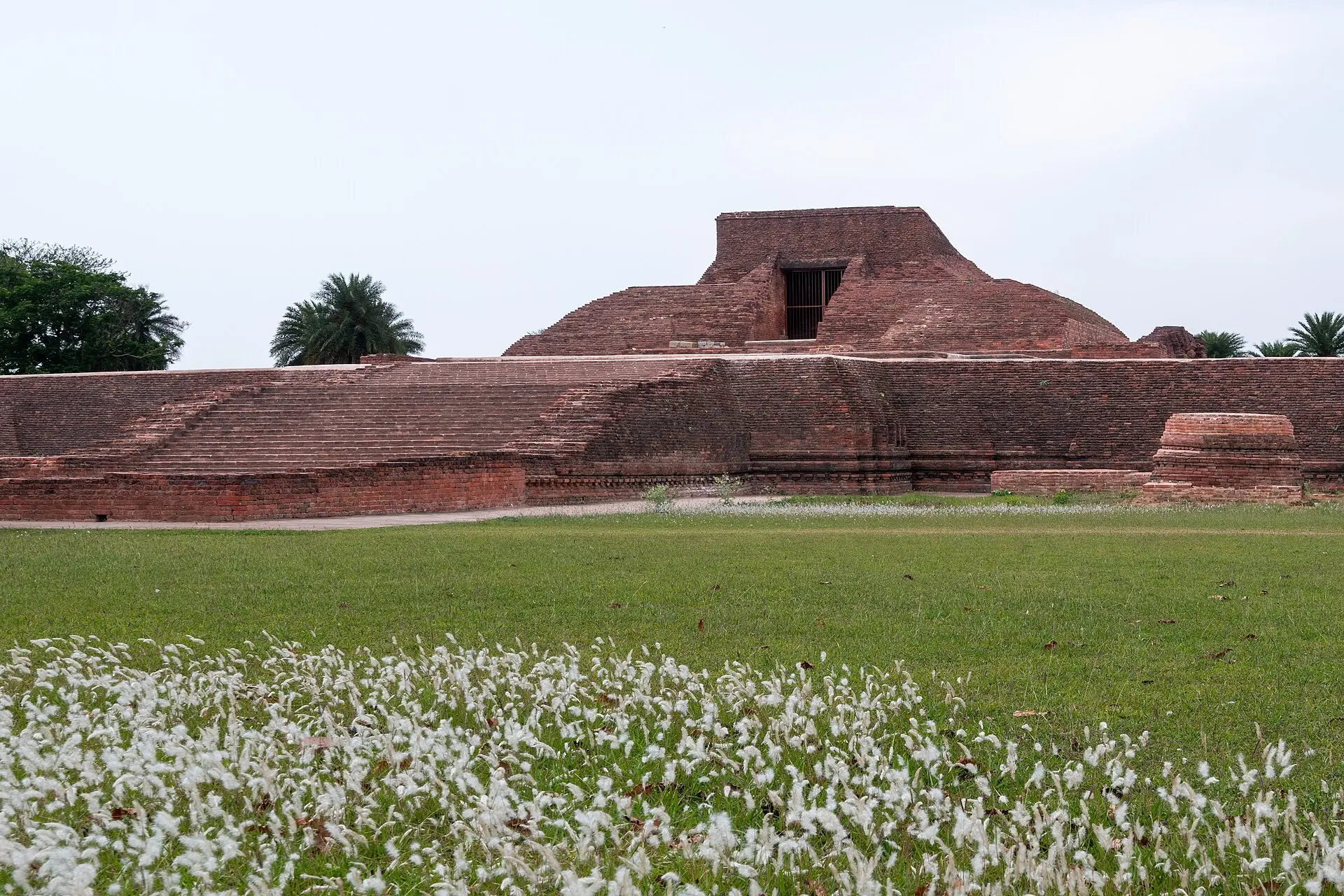
Monastery 5 ruins, Nalanda Mahavihara
Monastery 5 ruins, Nalanda Mahavihara. Sumitsurai, CC BY-SA 4.0
Use this photo
Monastery 5 ruins, Nalanda Mahavihara. Photo: Sumitsurai, CC BY-SA 4.0 (https://creativecommons.org/licenses/by-sa/4.0/), via Wikimedia Commons: https://commons.wikimedia.org/wiki/File:Monastery_5_-_Nalanda_Mahavihara_(1).jpg
Download 1920px
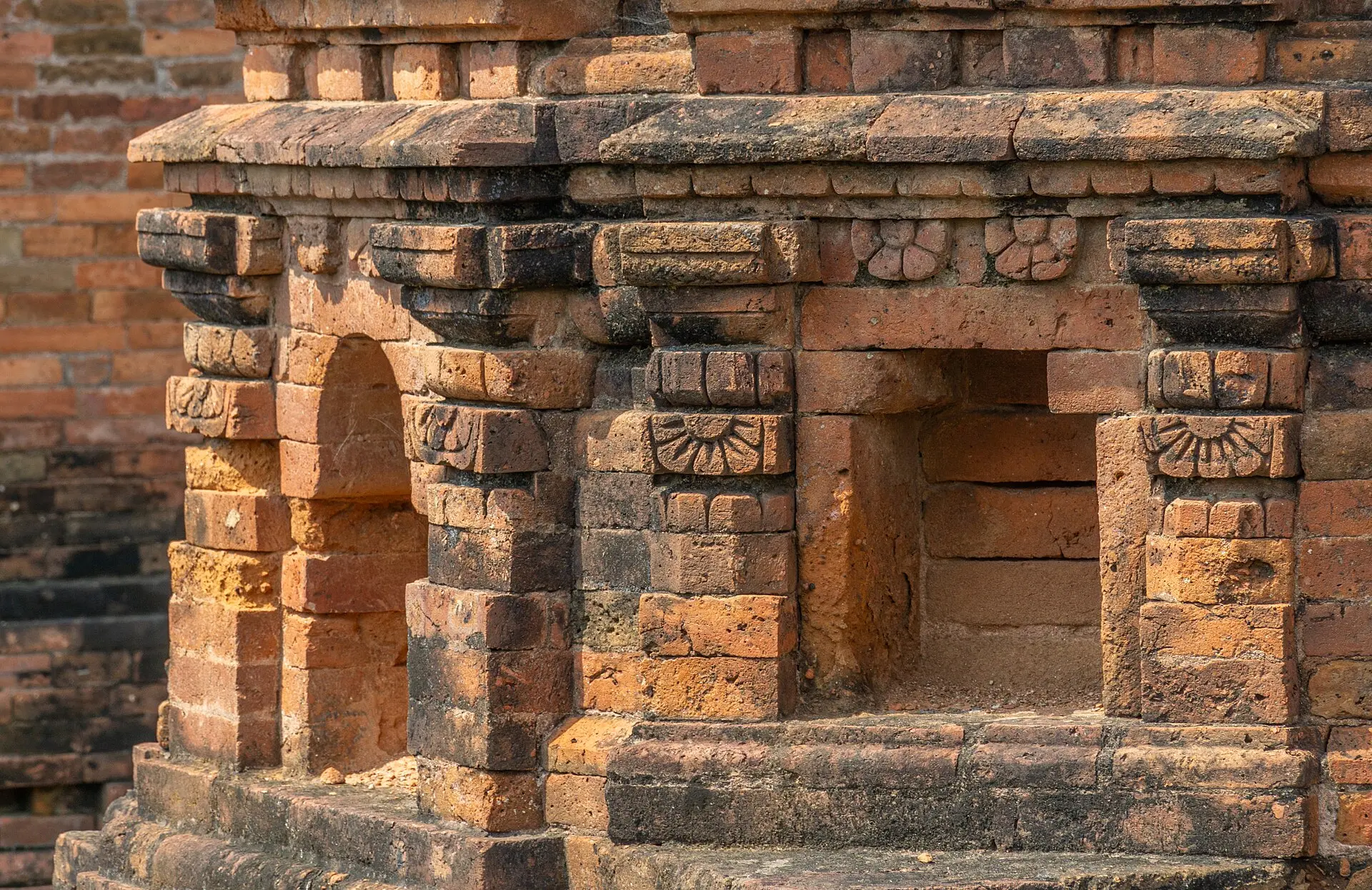
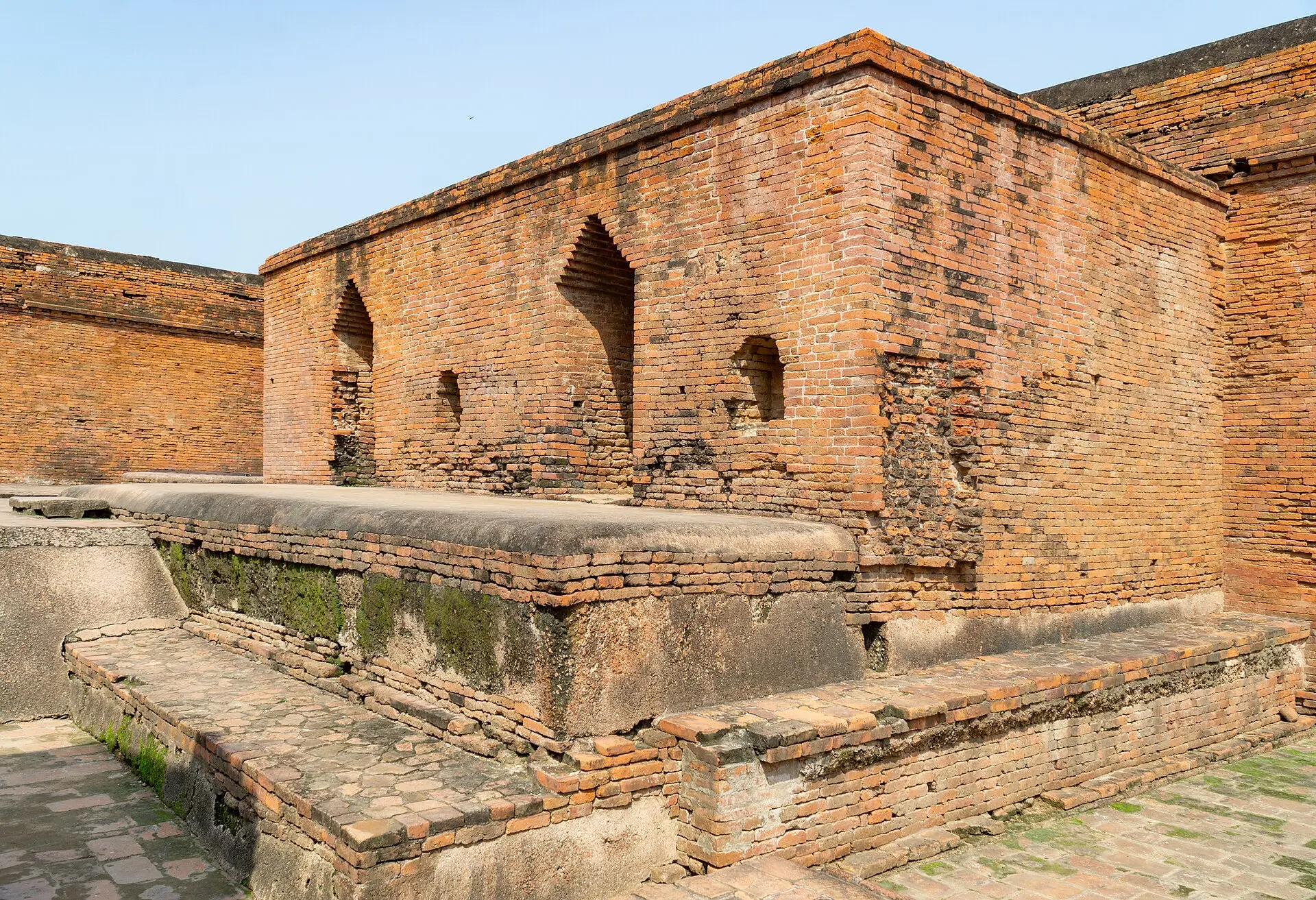
Temple 12 brickwork, Nalanda Mahavihara
Temple 12 brickwork, Nalanda Mahavihara. Sumitsurai, CC BY-SA 4.0
Use this photo
Temple 12 brickwork, Nalanda Mahavihara. Photo: Sumitsurai, CC BY-SA 4.0 (https://creativecommons.org/licenses/by-sa/4.0/), via Wikimedia Commons: https://commons.wikimedia.org/wiki/File:Temple_12_-_Nalanda_Mahavihara_(9).jpg
Download 1920px
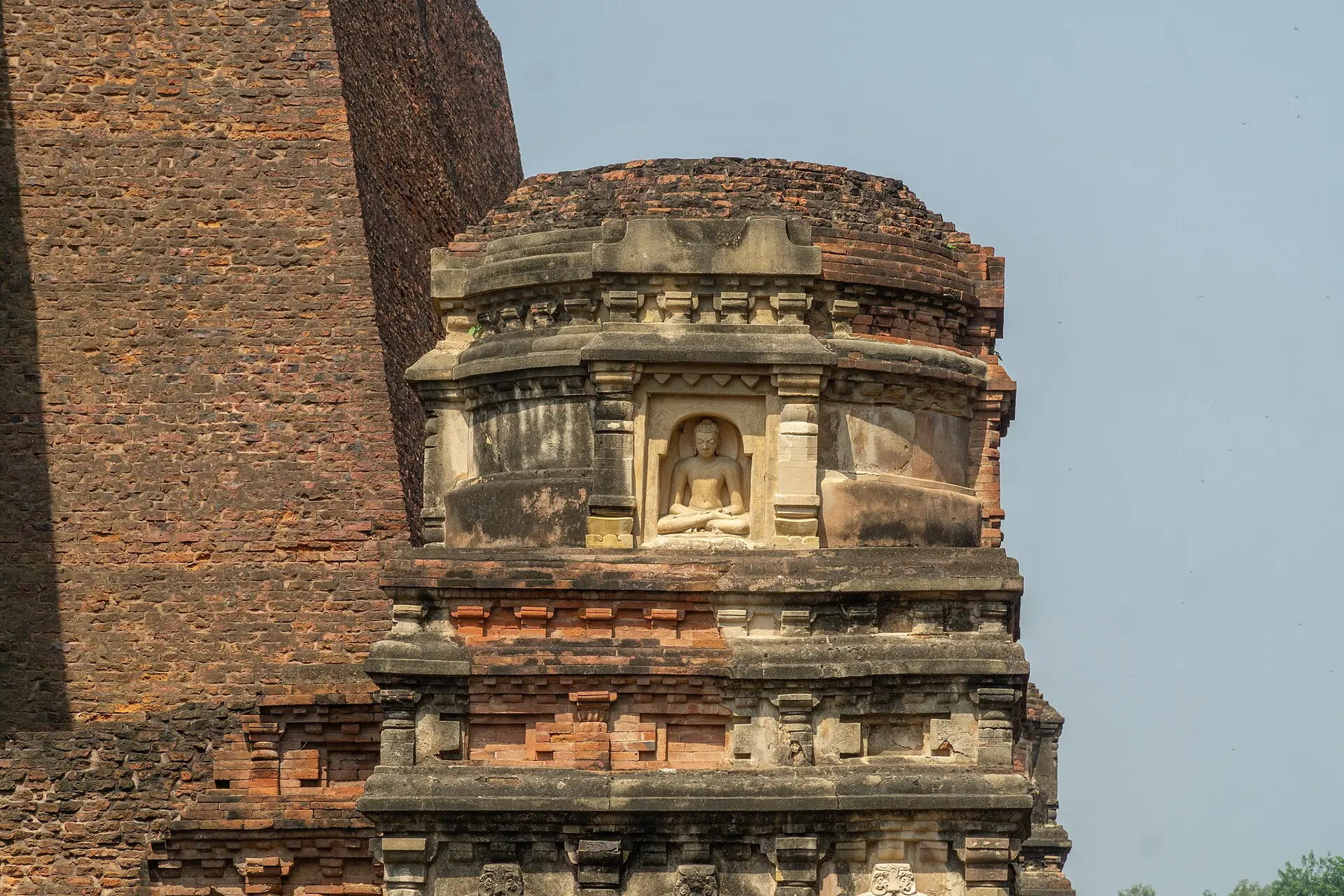
Stucco work on Temple 3, Nalanda Mahavihara
Stucco work on Temple 3, Nalanda Mahavihara. Sumitsurai, CC BY-SA 4.0
Use this photo
Stucco work on Temple 3, Nalanda Mahavihara. Photo: Sumitsurai, CC BY-SA 4.0 (https://creativecommons.org/licenses/by-sa/4.0/), via Wikimedia Commons: https://commons.wikimedia.org/wiki/File:Temple_3_-_Sariputta_Stupa_-_Stucco_Works_-_Nalanda_Mahavihara_(20).jpg
Download 1920px
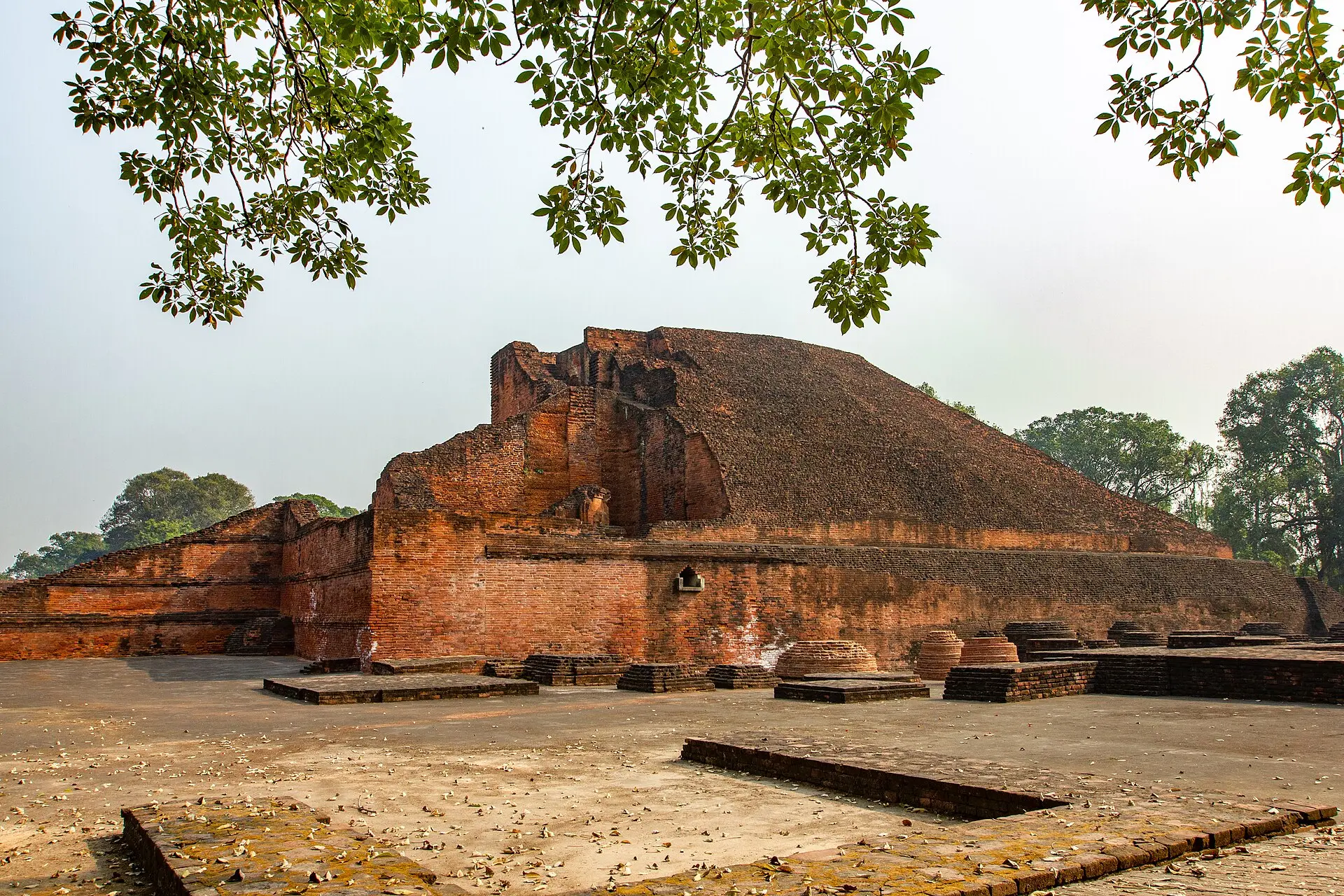
Temple 3 (Sariputta Stupa), Nalanda Mahavihara, Bihar
Temple 3 (Sariputta Stupa), Nalanda Mahavihara, Bihar. Uphogaphy, CC BY-SA 4.0
Use this photo
Temple 3 (Sariputta Stupa), Nalanda Mahavihara, Bihar. Photo: Uphogaphy, CC BY-SA 4.0 (https://creativecommons.org/licenses/by-sa/4.0/), via Wikimedia Commons: https://commons.wikimedia.org/wiki/File:Nalanda_The_Great_Stupa.jpg
Download 1920px
Excavated monastery ruins at Nalanda, Bihar
Excavated monastery ruins at Nalanda, Bihar. Indianvagabond, CC BY-SA 4.0
Use this photo
Excavated monastery ruins at Nalanda, Bihar. Photo: Indianvagabond, CC BY-SA 4.0 (https://creativecommons.org/licenses/by-sa/4.0/), via Wikimedia Commons: https://commons.wikimedia.org/wiki/File:Temple_No_3_at_Nalanda_Mahavihara.jpg
Download 1920px
Temple 13, Nalanda Mahavihara, Bihar
Temple 13, Nalanda Mahavihara, Bihar. Rohit Sharma, CC BY-SA 4.0
Use this photo
Temple 13, Nalanda Mahavihara, Bihar. Photo: Rohit Sharma, CC BY-SA 4.0 (https://creativecommons.org/licenses/by-sa/4.0/), via Wikimedia Commons: https://commons.wikimedia.org/wiki/File:Temple_13,_Nalanda_Mahavihara,_Bihar,_India.jpg
Download 1920px

Books from this library

Sources