Use this photo
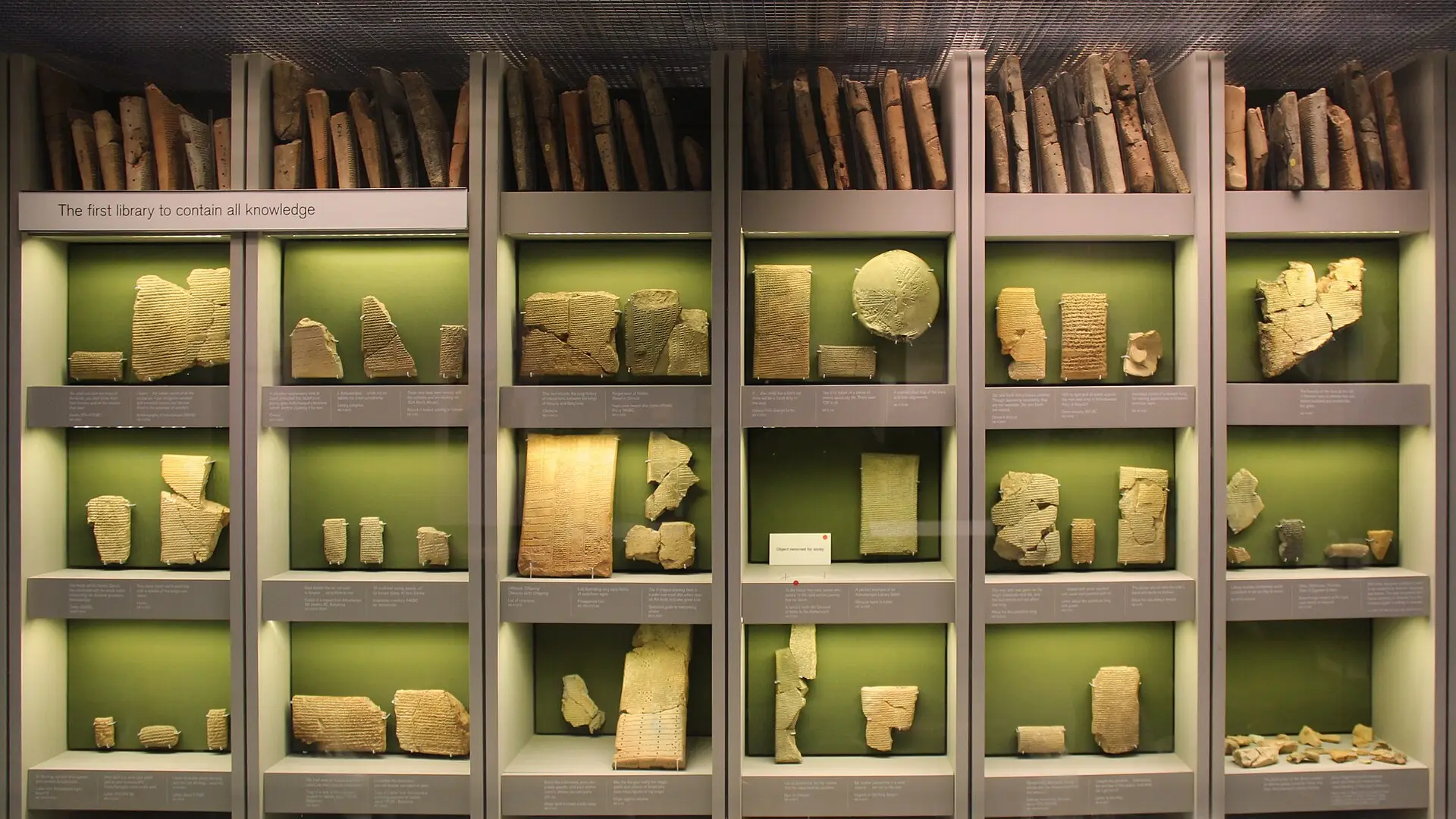
Library of Ashurbanipal gallery, British Museum, London. Photo: Gary Todd, CC0 (https://creativecommons.org/publicdomain/zero/1.0/), via Wikimedia Commons: https://commons.wikimedia.org/wiki/File:Library_of_Ashurbanipal.jpgDownload 1920px
Library of Ashurbanipal
Nineveh, near Mosul, Iraq, Ashurbanipal reigned from 669/668 BCE
lostreconstruction, imagined
See it on the globeFollow the collectionCompare with anotherRead the record3 books from here
Add to a shelf
A reconstruction, imagined
Drag to look around. Tap the round markers to learn what you are looking at.
Loading the room
Drag to look around. Tap a marker for detail.
- visitedGenerated image, not a photograph. Based on Layard: two small chambers opening into each other, their bas-reliefs mostly destroyed, the first doorway guarded by fish-gods, the floor filled a foot or more deep with clay tablets, most of them broken, the largest about 9 by 6.5 inches and the smallest about an inch long. The image shows cracked, blackened wall slabs with almost no carving left, one doorway to a second chamber with a fish-cloaked figure on each side, a floor covered in broken tablet pieces, and timber beams under reed matting. Guessed: the room size, the light, the cracking and blackening, and how the fish figures were carved. Not matched: the floor pieces nearest the viewer are larger than the sizes Layard gives, and the marks on them are not real cuneiform. The beams look slightly curved because of the image projection. The roof of this room is not recorded, and the reed matting is a guess
Connecting doorway
Object, in an imagined viewLayard describes two small chambers that opened into each other. The doorway to a second chamber stands for that link. Its size and frame are guesses.
This view is imagined. The thing described was found on the ground, and the source below says by whom.
excavated primary Source
Fish-cloaked figures
Object, in an imagined viewLayard says the first doorway was guarded by fish-gods. The image puts a relief figure in a fish cloak on each side of the doorway. How they were carved, their height and their pose are guesses.
This view is imagined. The thing described was found on the ground, and the source below says by whom.
excavated primary Source
Ruined wall slabs
Object, in an imagined viewLayard found the bas-reliefs of these chambers mostly destroyed. The image shows cracked, blackened slabs with almost no carving left. The pattern of the damage is a guess.
This view is imagined. The thing described was found on the ground, and the source below says by whom.
excavated primary Source
Broken tablets on the floor
Object, in an imagined viewLayard found the chambers filled a foot or more deep with clay tablets, most of them broken. The largest were about 9 by 6.5 inches and the smallest about an inch long. The image covers the floor with broken pieces. The pieces nearest the viewer are larger than those sizes, and the marks on them are not real cuneiform.
This view is imagined. The thing described was found on the ground, and the source below says by whom.
excavated primary Source
Roof beams
Object, in an imagined viewSennacherib's inscriptions say the palace halls were roofed with beams of cedar and cypress. That is borrowed here: the roof of this small chamber is not known. The image shows straight timber beams under reed matting. The matting is a guess, and the beams look slightly curved because of the image projection.
This view is imagined. The thing described is borrowed from a comparable building. The source below describes that building, not this one.
comparandum secondary Source
Where the books are now
Surviving items, by the institution that holds them today. Each line has its source and how well it is proven.
- British Museum London, United Kingdom
Most tablets and fragments of the Library of Ashurbanipal Count: 30,000
Take the evidence with you
Export this page's facts, sources, viewpoints, and any captured-camera position as a citable notebook or CSL JSON.
The record
Worth knowing
Library of Ashurbanipal, worth knowing: Layard's first dig at Nineveh was a private venture financed by Stratford Canning, the British ambassador in Constantinople.
Library of Ashurbanipal, worth knowing: Library tablets carry a colophon stating that they belonged to the palace of Ashurbanipal, usually with detail and a prayer.
Library of Ashurbanipal, worth knowing: The British Museum's Ashurbanipal Library Project admits that nobody fully understands what counted as the library, or how many there were.
Library of Ashurbanipal, worth knowing: The project describes Ashurbanipal's collection as the most significant library of antiquity until Alexandria.
Location
Library of Ashurbanipal, location: Nineveh (mound of Kuyunjik), near Mosul, Iraq
Built
Library of Ashurbanipal, built: Ashurbanipal reigned 668/669 - c. 630 BCE; accession is not a founding date for the library
Volumes
Library of Ashurbanipal, volumes: about 32,000 tablets and fragments (Kuyunjik Collection)
What remains
Library of Ashurbanipal, what remains: tablets in British Museum; site mound Kuyunjik at Nineveh
Reconstruction
Library of Ashurbanipal, reconstruction: Layard & Rassam, spring 1852, in the South-West Palace (Sennacherib) at Kuyunjik: two small interconnected "chambers of records".
Library of Ashurbanipal, reconstruction: Entered via a doorway flanked by fish-god figures; two small chambers opening into each other, once panelled with bas-reliefs (mostly destroyed).
Library of Ashurbanipal, reconstruction: Tablets lay on the floor to a depth of a foot or more (~0.3 m), mostly broken, probably by collapse of the upper building. No shelves described.
Library of Ashurbanipal, reconstruction: Largest tablets flat, about 9 x 6.5 inches (~0.23 x 0.17 m); smaller ones slightly convex, some about an inch (~0.025 m) long.
Library of Ashurbanipal, reconstruction: Rassam, Dec 1853, North Palace (Ashurbanipal): lion-hunt relief chamber 50 x 15 ft (~15.2 x 4.6 m) in which heaps of tablets were found.
Library of Ashurbanipal, reconstruction: Budge: no remains showed tablets were stored systematically there; they seem brought from elsewhere and thrown down. Original shelving/arrangement unknown.
Library of Ashurbanipal, reconstruction: Budge states how tablets were arranged in the library is not known; groups were catalogued and some labelled.
What happened here
668 BCLibrary of Ashurbanipal, founded, 668 BC: Ashurbanipal reigns (669/668-c.630 BCE) and collects the library; exact founding of the library not dated
612 BCLibrary of Ashurbanipal, destroyed, 612 BC: Nineveh sacked; tablets burned (and thereby baked and preserved)
1849Library of Ashurbanipal, rediscovered, 1849: Layard finds tablets in Sennacherib's South-West Palace, late 1849
1850Library of Ashurbanipal, excavated, 1850: British Museum excavations at Nineveh, 1850s to 1930s
1853Library of Ashurbanipal, excavated, 1853: Rassam finds tablets in Ashurbanipal's North Palace; Layard 1853 publication cited by BM project
Photographs

Use this photo
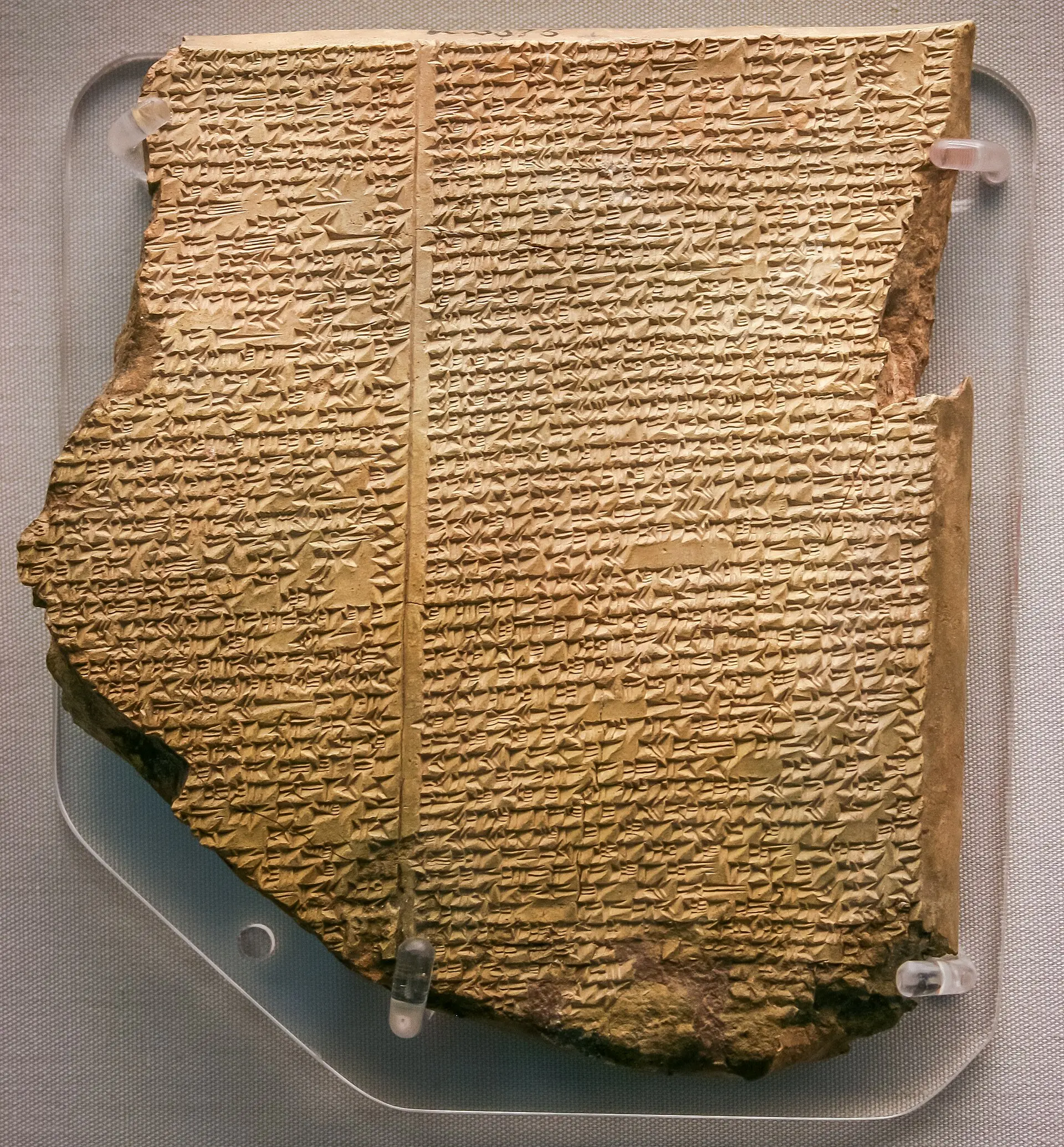
Flood Tablet from the Library of Ashurbanipal, Nineveh. Photo: Photograph by Mike Peel (www.mikepeel.net)., CC BY-SA 4.0 (https://creativecommons.org/licenses/by-sa/4.0/), via Wikimedia Commons: https://commons.wikimedia.org/wiki/File:British_Museum_Flood_Tablet_1.jpgDownload 1920px

Use this photo
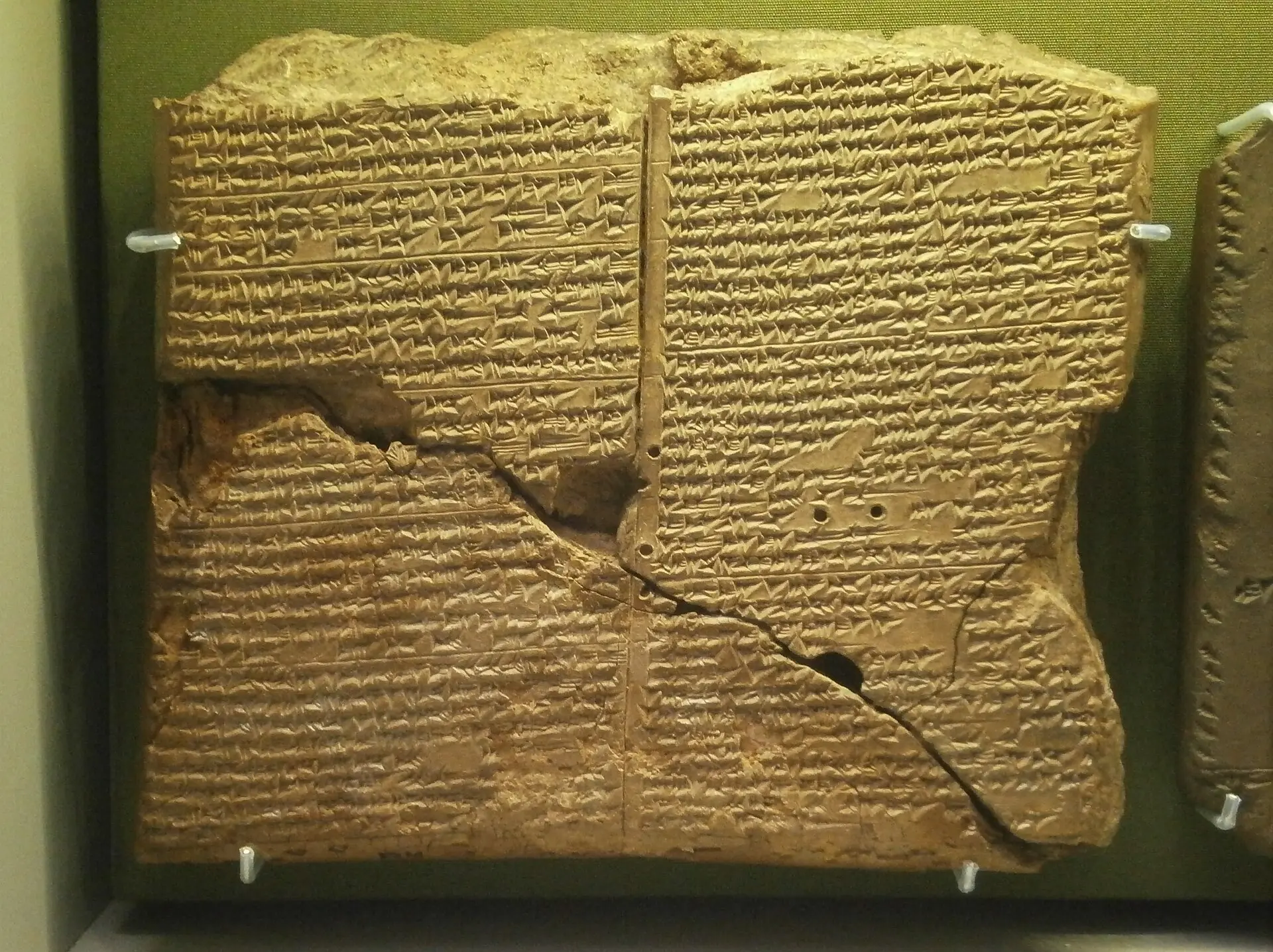
Synchronistic History tablet from Ashurbanipal's library, Nineveh. Photo: Zunkir, CC BY-SA 4.0 (https://creativecommons.org/licenses/by-sa/4.0/), via Wikimedia Commons: https://commons.wikimedia.org/wiki/File:Synchronistic_History_K.4401.jpgDownload 1920px

Use this photo
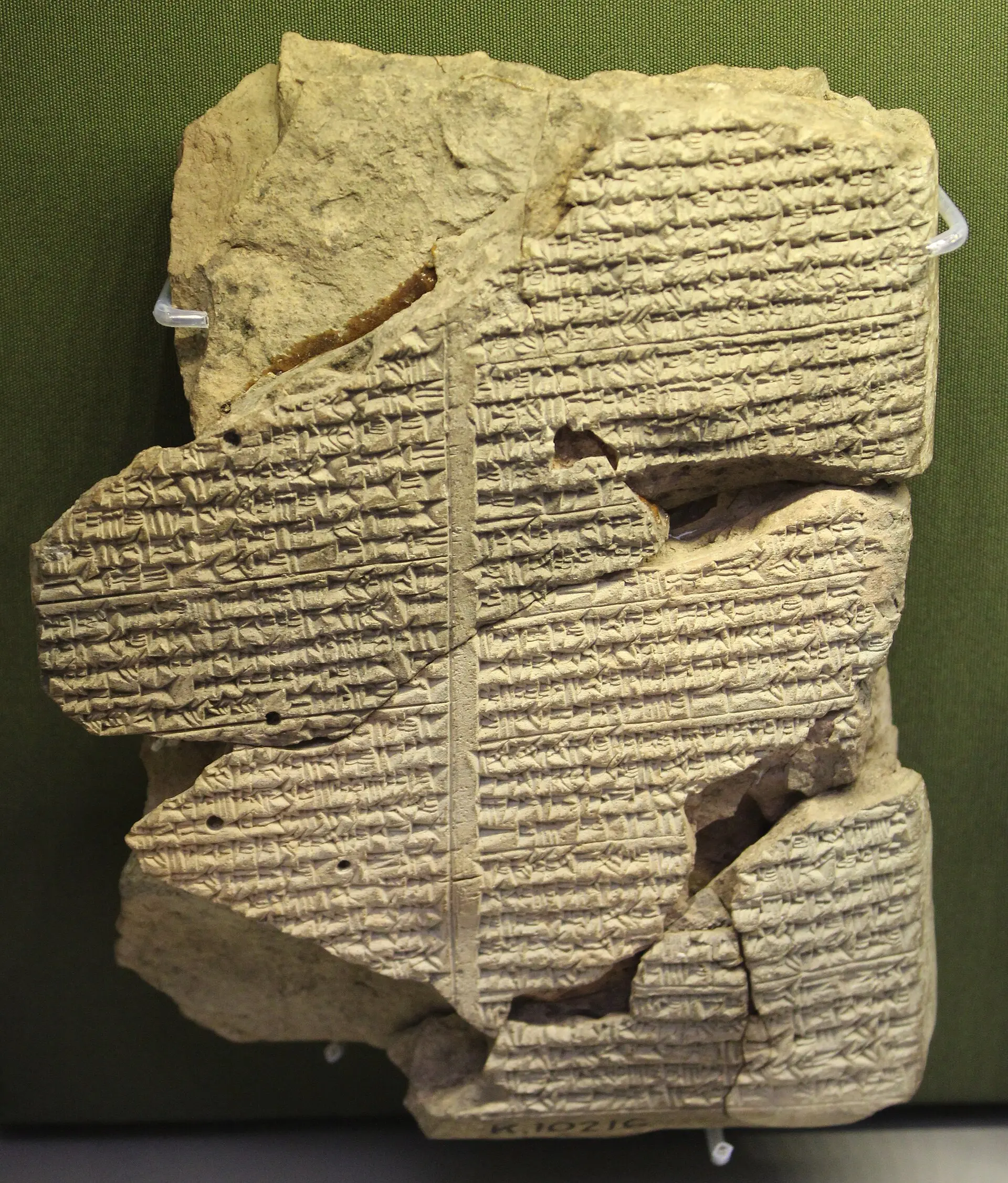
Ritual tablet from Nineveh, 7th century BCE. Photo: Zunkir, CC BY-SA 4.0 (https://creativecommons.org/licenses/by-sa/4.0/), via Wikimedia Commons: https://commons.wikimedia.org/wiki/File:Ritual_for_a_substitute_king_Nineveh.jpgDownload 1920px
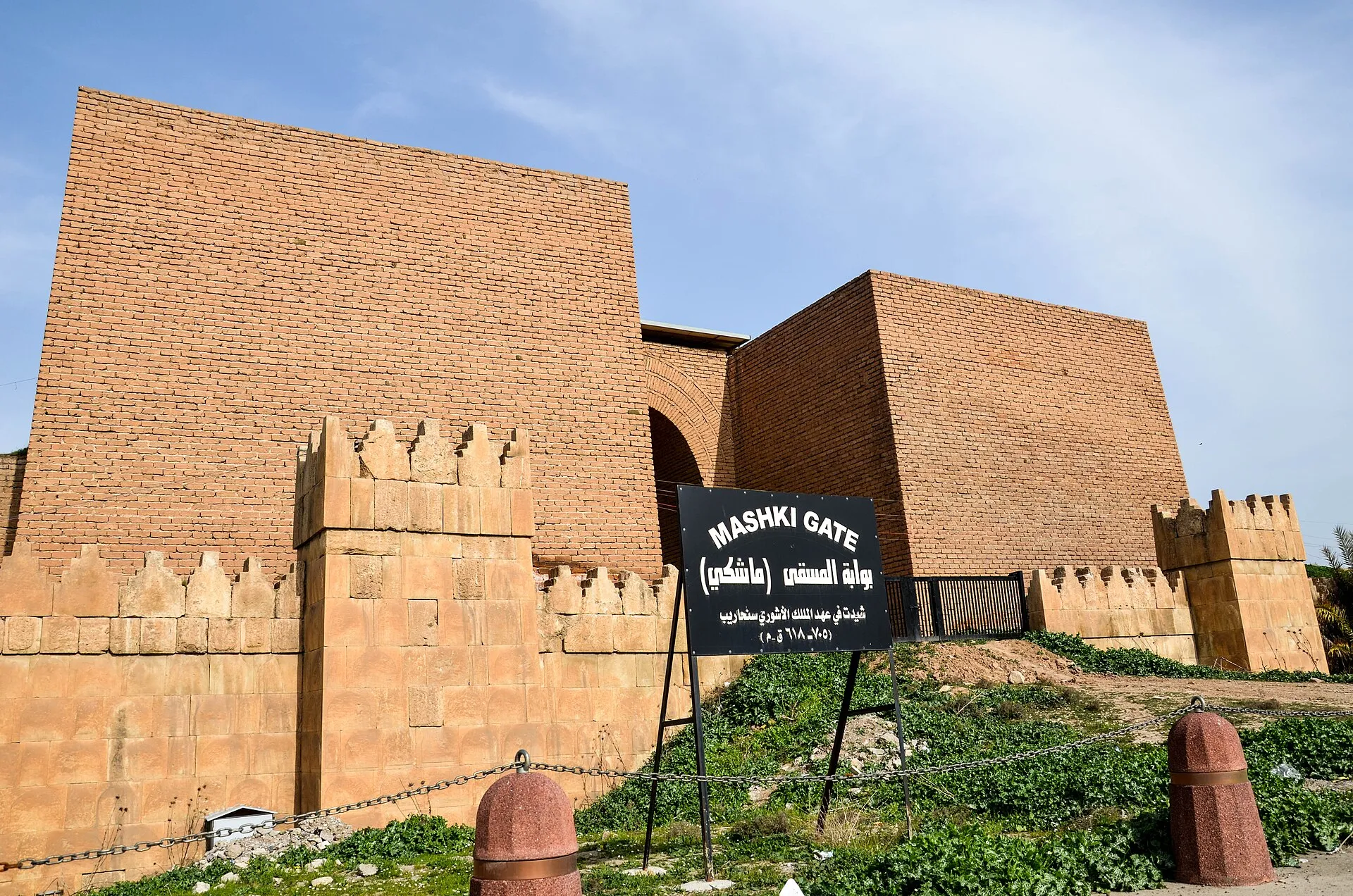

Use this photo
Reconstructed Mashki Gate, Nineveh. Photo: Mohamed albaroodi91, CC BY-SA 4.0 (https://creativecommons.org/licenses/by-sa/4.0/), via Wikimedia Commons: https://commons.wikimedia.org/wiki/File:Mashki_gate_1.jpgDownload 1920px
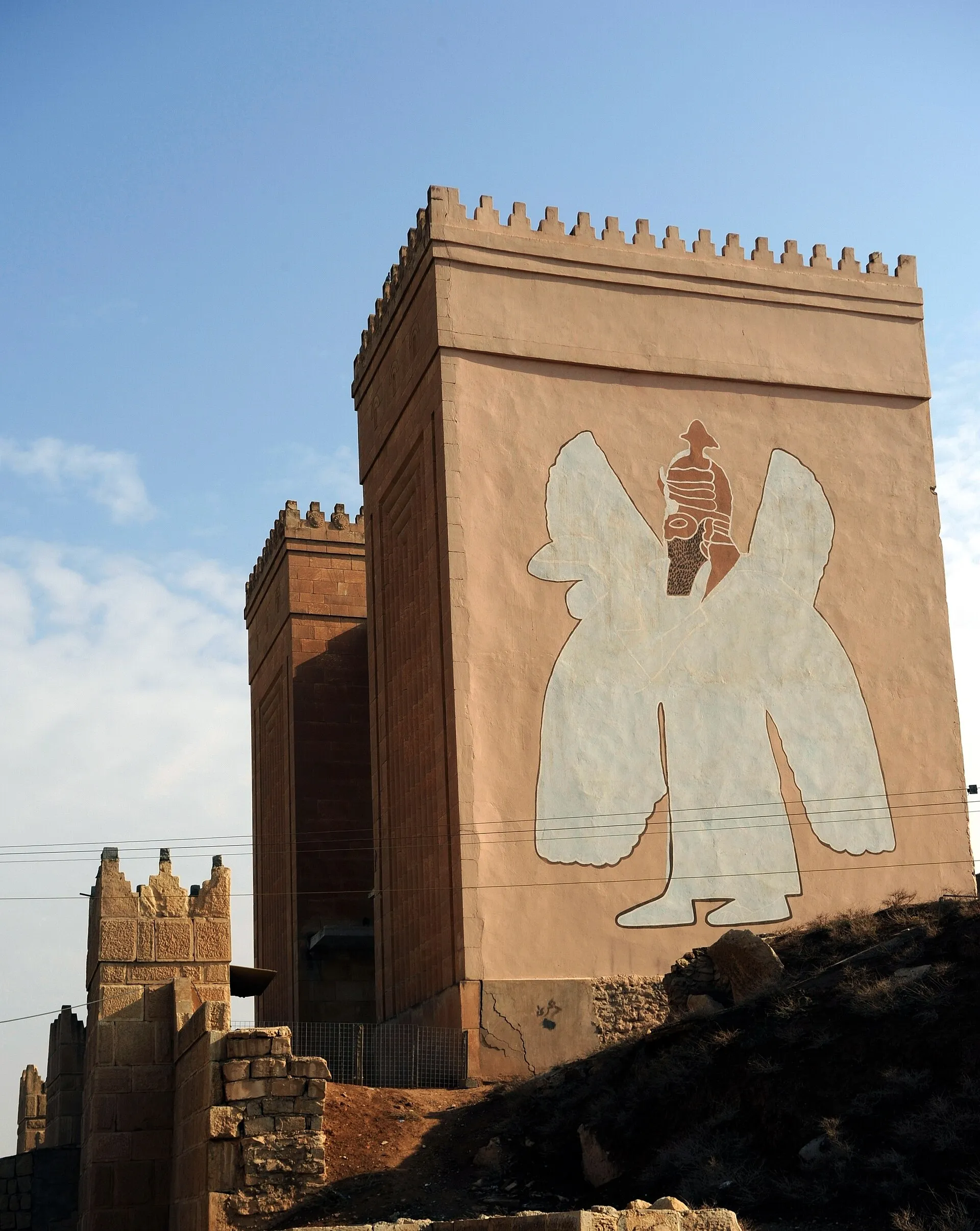

Use this photo
Reconstructed Nergal Gate with a painted winged figure, Nineveh. Photo: JoAnn S. Makinano, U.S. Air Force, Public domain, via Wikimedia Commons: https://commons.wikimedia.org/wiki/File:Nergal_gate_in_Nineveh.JPGDownload 1920px
Books from this library
Sources
- https://oracc.museum.upenn.edu/asbp/whatisthelibrary/index.html
- https://www.gutenberg.org/cache/epub/11000/pg11000-images.html
- https://www.gutenberg.org/files/7096/7096-8.txt
- https://www.gutenberg.org/files/39897/39897-8.txt
- https://oracc.museum.upenn.edu/asbp/RecordingtheLibrary/index.html
- https://oracc.museum.upenn.edu/asbp/Colophons/index.html
- https://oracc.museum.upenn.edu/asbp/WhatistheLibrary/index.html
- https://en.wikipedia.org/w/index.php?title=Library_of_Ashurbanipal&action=raw
- https://oracc.museum.upenn.edu/asbp/index.html