Use this photo
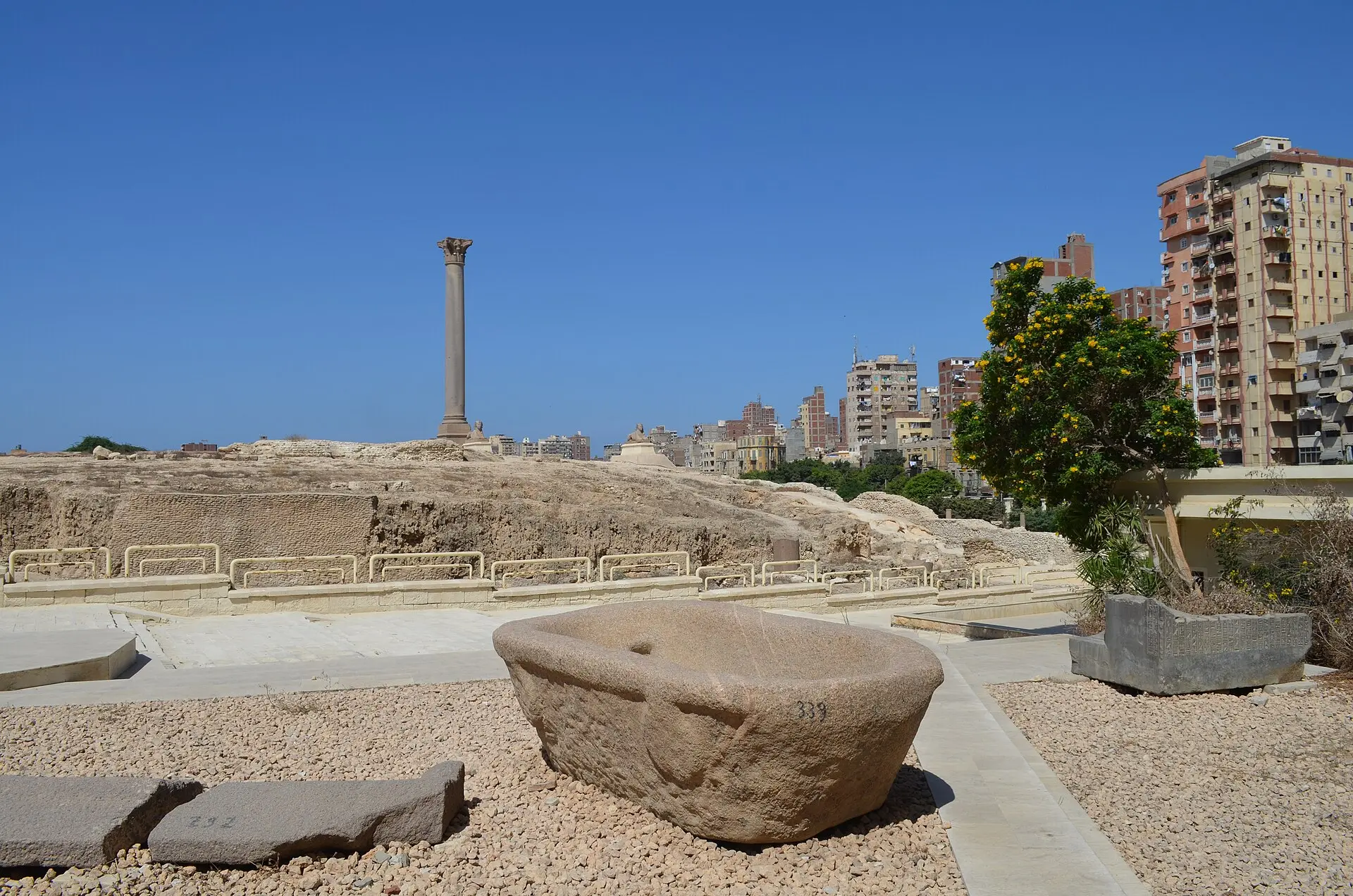
The Serapeum site and Pompey's Pillar, Alexandria. Photo: Hatem Moushir, CC BY-SA 4.0 (https://creativecommons.org/licenses/by-sa/4.0/), via Wikimedia Commons: https://commons.wikimedia.org/wiki/File:Pompey%27s_Pillar_(Archaeological_site_in_Alexandria_in_2017)_,_photo_by_Hatem_Moushir_35.jpgDownload 1920px
Library of Alexandria
Alexandria, Egypt, Possibly under Ptolemy II, 285–246 BCE
reconstruction, imagined
No remains identified; a conjectural scene, shown beside Celsus. The Bibliotheca Alexandrina (2002) commemorates it
See it on the globeCompare with anotherRead the record1 books from here
Add to a shelf
A reconstruction, imagined
Drag to look around. Tap the round markers to learn what you are looking at.
Loading the room
Drag to look around. Tap a marker for detail.
- visitedGenerated image, not a photograph. Based on one sentence of Strabo (Geography 17.1.8): the Museum is part of the palaces and has a public walk, a place furnished with seats and a large hall in which the men of learning of the Museum take their common meal. Strabo is describing the Museum. He does not mention the Library in this passage, and no remains of the Library have been recovered, so nothing here shows its rooms. The image shows a colonnade, a stepped seating recess and a stone hall with a door. The seating looks like a small theatre and the planters look modern. A tower-shaped shadow falls across the paving with no tower to cast it, and faint ghost columns show at the image edges. The distant pedimented buildings, columns, paving, colours, proportions, sea view and planting are guesses
The public walk
Object, in an imagined viewStrabo writes that the Museum is part of the palaces and has a public walk. The curved colonnade stands for that walk. The column style, the curve, the roof and the proportions are guesses.
This view is imagined. The thing described is in the written record, and the source below says where.
attested primary Source
Place with seats
Object, in an imagined viewStrabo also lists a place furnished with seats. He gives no size or look. The curved stone steps are invented and look more like a small theatre than anything he describes.
This view is imagined. The thing described is in the written record, and the source below says where.
attested primary Source
Door to the large hall
Object, in an imagined viewStrabo names a large hall in which the men of learning of the Museum take their common meal. He does not say where it stood or what it looked like. The stone block and its doorway are a guess.
This view is imagined. The thing described is in the written record, and the source below says where.
attested primary Source
Sea and gardens
Object, in an imagined viewSea, palms, cypresses and distant pedimented buildings beyond the walk. Strabo's sentence gives no view. They are invented.
This view is imagined. The thing described is a guess. No source records it for this library.
invented primary Source
Paving
Object, in an imagined viewStone slabs. Nothing is recorded of the surface. A tower-shaped shadow falls across them to one side, and no building in the image casts it.
This view is imagined. The thing described is a guess. No source records it for this library.
invented primary Source
Take the evidence with you
Export this page's facts, sources, viewpoints, and any captured-camera position as a citable notebook or CSL JSON.
The record
Room
Library of Alexandria, room: No plan survives; evidence scored 1 of 5
Worth knowing
Library of Alexandria, worth knowing: Fellows of the Museum at Alexandria received free board and paid no tax, according to Bevan's history of the Ptolemies.
Library of Alexandria, worth knowing: In the Letter of Aristeas the librarian Demetrius tells the king the library holds more than 200,000 books and that he hopes to reach 500,000. The account is the letter's own, not independent evidence.
Library of Alexandria, worth knowing: One story says Ptolemy III borrowed Athens' official copies of the tragedians, on the pretext of having copies made.
Library of Alexandria, worth knowing: Tradition holds, following the Letter of Aristeas, that the High Priest at Jerusalem sent six elders from each tribe, seventy-two in all, to translate the Jewish law for the royal library.
Library of Alexandria, worth knowing: Vitruvius tells how Aristophanes, a reader in the library, exposed contest poets as plagiarists by pulling matching books from the shelves from memory. The king made him librarian.
Built
Library of Alexandria, built: Part of the Mouseion in the Brucheion (royal quarter); layout unknown
Library of Alexandria, built: Layout unknown: no architectural remains or archaeological finds definitely attributable to the Library have been recovered
Volumes
Library of Alexandria, volumes: Ancient figures conflict: 700,000 (Ammianus, burned 48 BCE) and 40,000 (Seneca)
Library of Alexandria, volumes: Seneca: forty thousand books burned at Alexandria
What remains
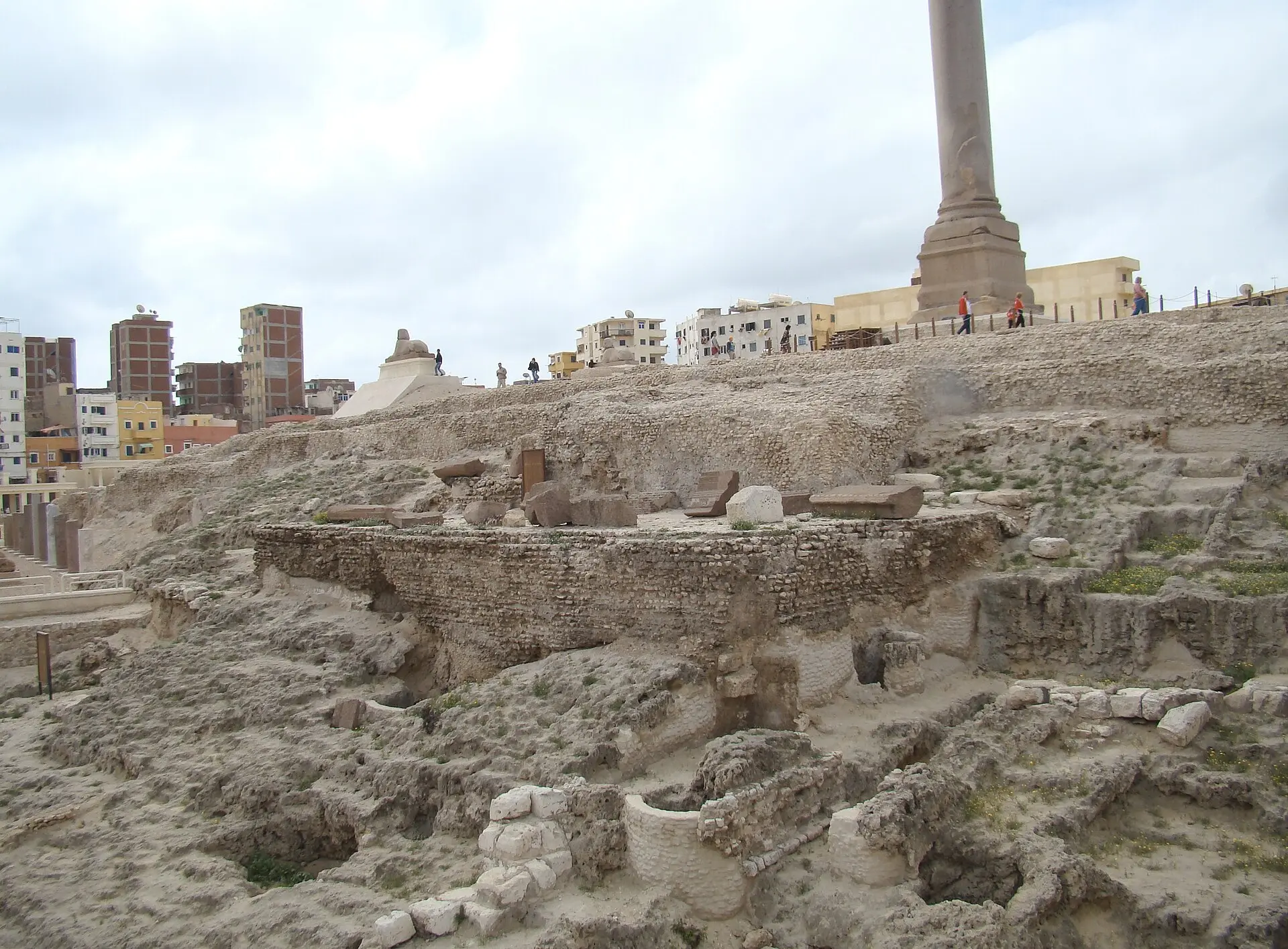
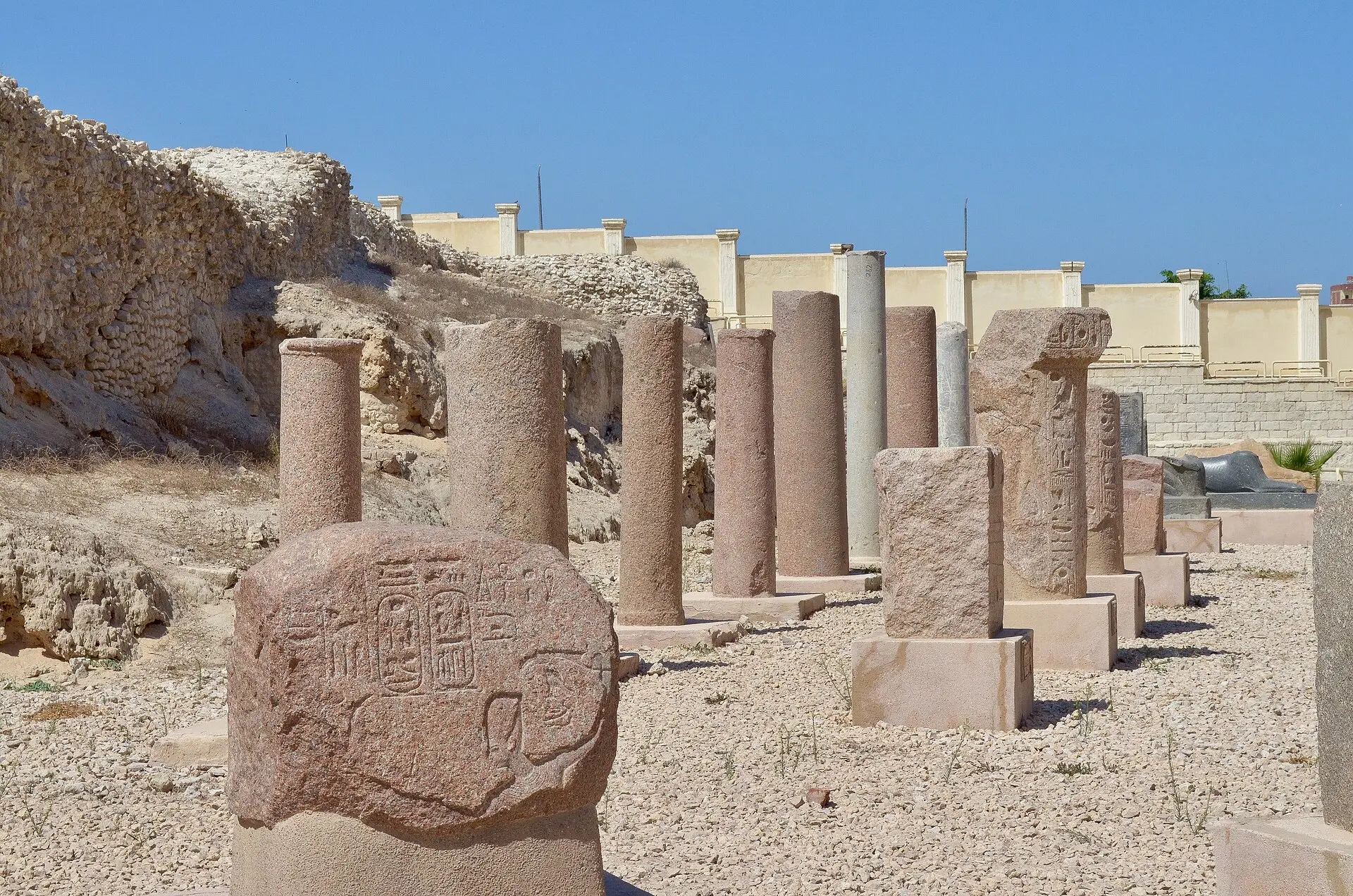
Library of Alexandria, what remains: Serapeum ruins survive (Pompey's Pillar site); no identified remains of the Library itself
Library of Alexandria, what remains: Nothing definitely attributable to the Library has been recovered; Serapeum temple (where a Christian church was later built) was destroyed under Theophilus
Status today
Library of Alexandria, status today: Strabo describes the Museum: public walk, exedra, large house with common mess-hall for scholars; he does not describe book rooms
Reconstruction
Library of Alexandria, reconstruction: The Mouseion lay within the royal palace quarter ("a part of the palaces"). Trans. Hamilton & Falconer (1854), Strabo 17.1.8.
Library of Alexandria, reconstruction: The Mouseion had a public walk (Greek peripatos).
Library of Alexandria, reconstruction: A place furnished with seats (Greek exedra) adjoined the walk.
Library of Alexandria, reconstruction: A large hall where the resident scholars took their common meal.
Library of Alexandria, reconstruction: All royal buildings, including the Mouseion, were connected with one another and with the harbour.
Library of Alexandria, reconstruction: The Sema, an enclosure with the tombs of the kings and Alexander, was also part of the palaces, adjoining the Mouseion in Strabo's list.
Library of Alexandria, reconstruction: Daughter-library site: Serapeum with extensive columned halls and near-lifelike statues (Ammianus 22.16.12, Rolfe trans.).
Library of Alexandria, reconstruction: Ammianus says the Serapeum held "invaluable libraries". Translator footnote: Ammianus conflates the Bruchion and Serapeum libraries.
Library of Alexandria, reconstruction: Bohn (1885), citing Aphthonius Progymn. 12, says Serapeum colonnades surrounded an open court with rooms behind them for books, matching Pergamon.
Library of Alexandria, reconstruction: 1944 excavation at the Column of Diocletian site yielded foundation deposits of a Temple of Serapis; Ptolemy III named as builder on the plaques. No library building found in this report.
What happened here
285 BCLibrary of Alexandria, founded, 285 BC: Library established, possibly under Ptolemy II (285-246 BCE); groundwork perhaps Ptolemy I
285 BCLibrary of Alexandria, founded, 285 BC: Proposed by Ptolemy I Soter, built under Ptolemy II Philadelphus (282-246 BCE); no founding document
48 BCLibrary of Alexandria, damaged, 48 BC: Caesar's Alexandrian War fire. Extent disputed; Plutarch says fire destroyed "the great library", Gellius says books burned accidentally
48 BCLibrary of Alexandria, damaged, 48 BC: Gellius: books burned in the war with Alexandria, accidentally, by auxiliaries
48 BCLibrary of Alexandria, destroyed, 48 BC: Destruction dated variously: Caesar 48 BCE (most popular claim), Aurelian 272 CE, Diocletian 297, 391/415 or the 7th century
272Library of Alexandria, destroyed, 272: Aurelian's recapture damages the Brucheion quarter; library destroyed only "if it still existed"
391Library of Alexandria, destroyed, 391: Serapeum (daughter library) demolished under Theophilus; whether it held books then is uncertain
Photographs

Use this photo
Remains of the Serapeum of Alexandria. Photo: Institute for the Study of the Ancient World, CC BY 2.0 (https://creativecommons.org/licenses/by/2.0/), via Wikimedia Commons: https://commons.wikimedia.org/wiki/File:The_Serapeum_of_Alexandria_(X).jpgDownload 1920px

Use this photo
Column stumps at the Serapeum site, Alexandria. Photo: Hatem Moushir, CC BY-SA 4.0 (https://creativecommons.org/licenses/by-sa/4.0/), via Wikimedia Commons: https://commons.wikimedia.org/wiki/File:Pompey%27s_Pillar_(Archaeological_site_in_Alexandria_2017)_,_photo_by_Hatem_moushir_2.jpgDownload 1920px
Books from this library
Sources
- https://en.wikipedia.org/w/index.php?title=Library_of_Alexandria&action=raw
- https://penelope.uchicago.edu/Thayer/E/Roman/Texts/Strabo/17A1*.html
- https://penelope.uchicago.edu/Thayer/E/Roman/Texts/Ammian/22*.html
- https://en.wikisource.org/w/index.php?title=Of_Peace_of_Mind&action=raw
- https://www.worldhistory.org/article/207/what-happened-to-the-great-library-at-alexandria/
- https://www.perseus.tufts.edu/hopper/text?doc=Perseus:text:1999.01.0239:book=17:chapter=1:section=8
- https://archive.org/download/dasheiligtumder00droygoog/dasheiligtumder00droygoog_djvu.txt
- https://en.wikipedia.org/wiki/Serapeum_of_Alexandria
- https://penelope.uchicago.edu/Thayer/E/Gazetteer/Places/Africa/Egypt/_Texts/BEVHOP/4F*.html
- https://www.ccel.org/c/charles/otpseudepig/aristeas.htm
- https://penelope.uchicago.edu/Thayer/E/Roman/Texts/Vitruvius/7*.html
- https://www.worldhistory.org/Library_of_Alexandria/
- https://penelope.uchicago.edu/Thayer/E/Roman/Texts/Plutarch/Lives/Caesar*.html
- https://penelope.uchicago.edu/Thayer/E/Roman/Texts/Gellius/7*.html